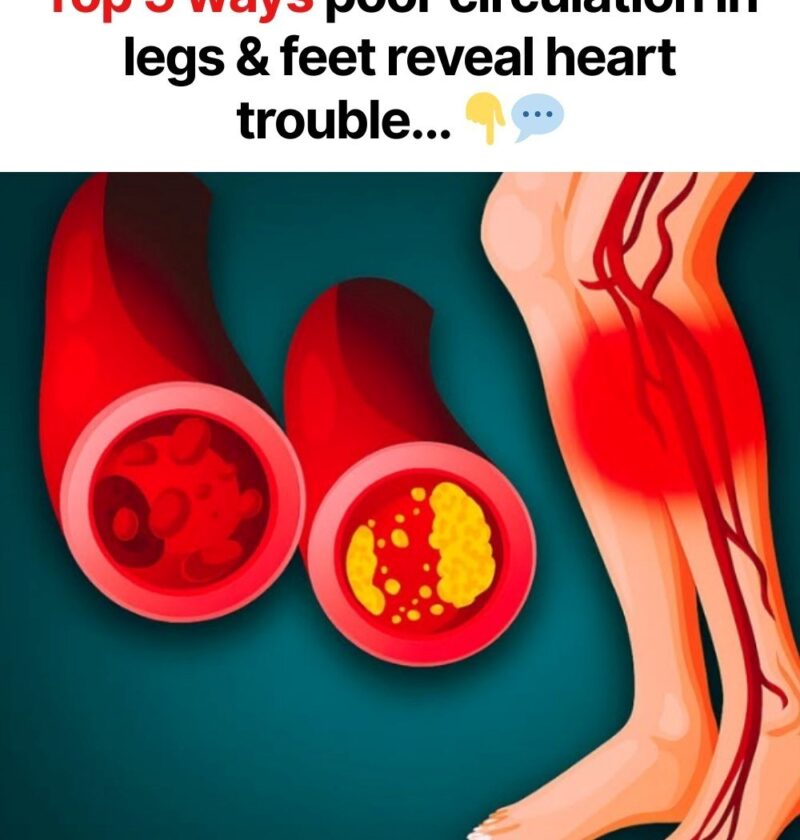
One important condition is Peripheral artery disease (PAD), where narrowed arteries reduce blood flow to the limbs. People with PAD often have a higher risk of heart attack and stroke because the same process can affect arteries elsewhere in the body.
5 ways circulation problems in the legs and feet may signal cardiovascular issues
1. Pain in the legs when walking
- Cramping, aching, or fatigue in the calves, thighs, or buttocks during activity
- Improves with rest
- Known as “claudication”
2. Cold feet or lower legs
- One foot may feel noticeably colder than the other
- Can occur when blood flow is reduced
3. Slow-healing wounds
- Cuts, sores, or ulcers on the feet that heal slowly
- Reduced circulation can impair tissue repair
4. Changes in skin or hair growth
- Shiny skin
- Reduced hair growth on the legs
- Thickened or brittle toenails
5. Weak or absent pulses in the feet
- A healthcare professional may detect reduced blood flow by checking pulses
Symptoms that may be more directly related to heart problems
Circulation symptoms become more concerning if they occur alongside:
- chest pain
- shortness of breath
- unexplained fatigue
- swelling of both legs
- dizziness or fainting
These may point toward conditions such as Heart failure or other cardiovascular disorders.
Risk factors
Poor circulation is more common in people with:
- smoking history
- diabetes
- high blood pressure
- high cholesterol
- older age
Bottom line
Leg and foot circulation problems can sometimes be an early clue to broader cardiovascular disease, especially PAD. However, not every cold foot or leg cramp is a sign of heart trouble. Persistent symptoms, especially pain with walking, slow-healing wounds, or accompanying heart-related symptoms, deserve medical evaluation.