Vertical Lines on Your Nails After 40: What They May Mean
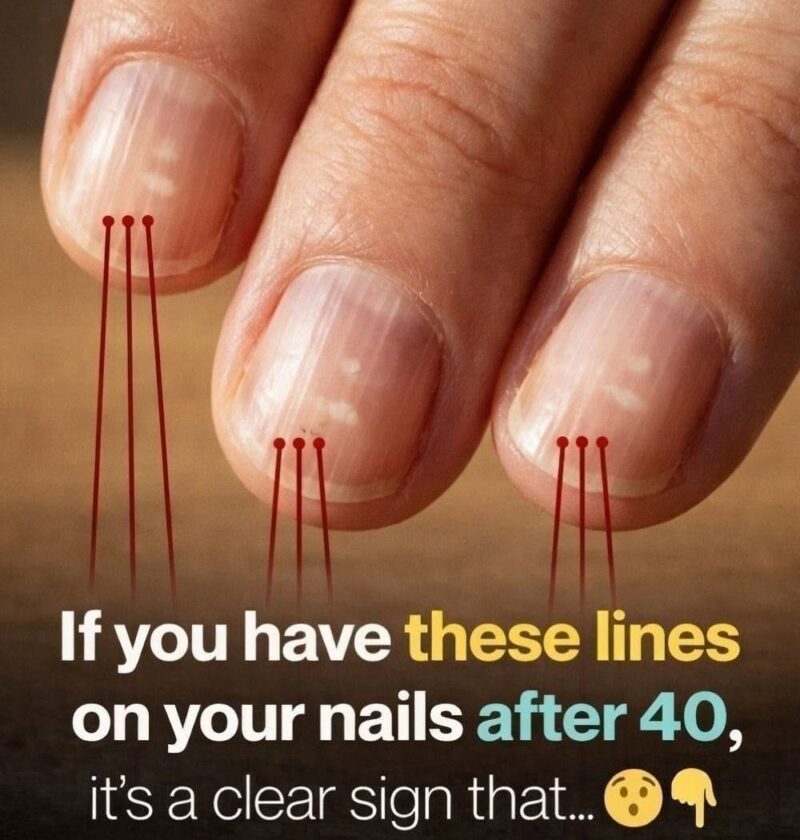
Vertical lines (also called longitudinal ridges) on fingernails are very common, especially as people get older. While they can sometimes be linked to health issues, they are not automatically a clear sign of a serious disease.
Common reasons for vertical nail ridges
1. Normal aging
After about age 40, the nail growth process can naturally change. The nail plate may become slightly drier and develop ridges running from the cuticle to the tip.
2. Dry nails or dehydration
When nails lose moisture, they can become:
- More brittle
- Rougher
- More likely to show ridges
Using moisturizer on your hands and nails regularly may help.
3. Nutrient deficiencies
In some cases, nail changes may be associated with low levels of nutrients such as:
- Iron
- Vitamin B12
- Zinc
- Other vitamins and minerals
A balanced diet is important, and testing is usually needed before assuming a deficiency.
4. Repeated nail stress
Frequent exposure to:
- Harsh soaps or chemicals
- Nail polish removers
- Excessive buffing
- Trauma to the nail
can make ridges more noticeable.
When vertical nail lines may need attention
Talk with a healthcare professional if you notice:
- A single dark vertical stripe (brown or black), especially if it is new or changing
- Sudden changes in many nails
- Nails becoming very thin, splitting, or lifting
- Pain, swelling, or changes around the nail
- Other symptoms such as unexplained weight loss, severe fatigue, or illness
A dark streak under a nail is different from ordinary pale vertical ridges and may need evaluation.
How to support healthier nails
- Keep nails and cuticles moisturized
- Wear gloves when using cleaning chemicals
- Avoid picking or biting nails
- Eat enough protein and a varied diet
- Avoid excessive use of harsh nail products
For most people over 40, fine vertical ridges are simply a common part of aging. The key is to pay attention to new, unusual, or rapidly changing nail patterns rather than the presence of ridges alone.