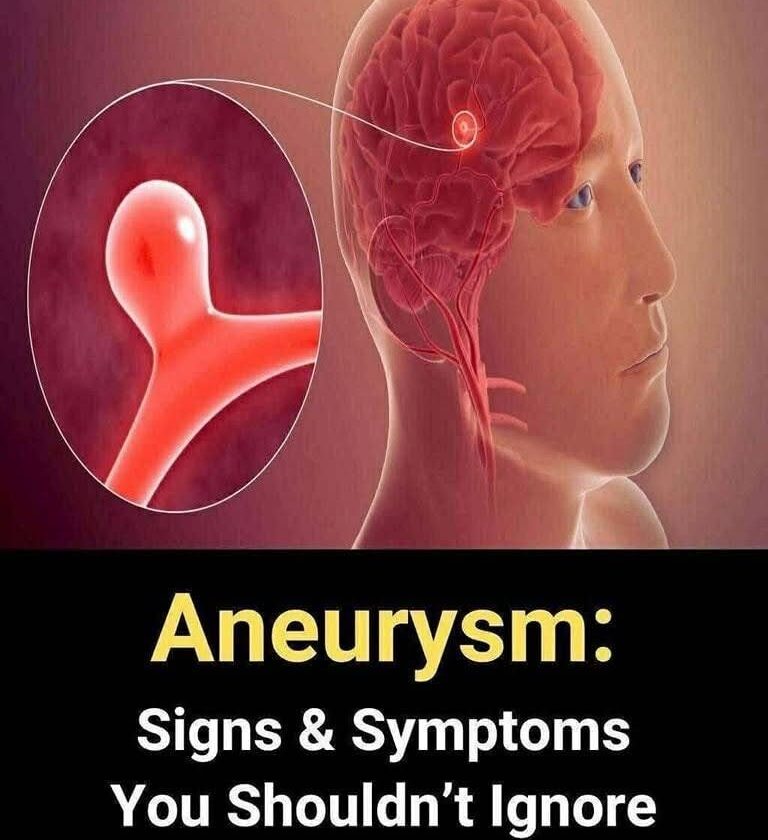
An aneurysm is a weakened area in the wall of a blood vessel that bulges or enlarges. Some aneurysms cause no symptoms and are found accidentally, but if one grows, leaks, or ruptures, it can become life-threatening.
Signs of an aneurysm you shouldn’t ignore
1. Sudden, severe headache
- A sudden “worst headache of your life,” especially with nausea, vomiting, neck stiffness, confusion, or loss of consciousness, can be a warning sign of a ruptured brain aneurysm and requires emergency care.
2. Vision changes
- Blurred vision, double vision, loss of vision, or a drooping eyelid may occur with some brain aneurysms.
3. Sudden weakness, numbness, or trouble speaking
- These stroke-like symptoms can occur if an aneurysm affects blood flow to the brain.
4. Seizure or fainting
- A ruptured aneurysm can irritate brain tissue and cause seizures or loss of consciousness.
5. Pain in the chest, back, or abdomen
- An aneurysm in the aorta (the body’s largest artery) may cause deep, persistent pain in the chest, back, or abdomen.
6. A pulsating feeling or lump
- Some abdominal aortic aneurysms may feel like a throbbing mass in the abdomen.
7. Difficulty swallowing or breathing
- A large aneurysm can sometimes press on nearby structures.
Seek emergency help immediately if:
- You have a sudden severe headache.
- You experience sudden neurological symptoms (face drooping, arm weakness, speech problems).
- You have severe chest, back, or abdominal pain with weakness, dizziness, or fainting.
Reducing aneurysm risk
- Keep blood pressure controlled.
- Avoid smoking and tobacco use.
- Manage cholesterol and diabetes.
- Exercise regularly and maintain a healthy weight.
- Follow screening recommendations if you have risk factors, such as a family history of aneurysm or certain cardiovascular conditions.
Many aneurysms are silent, so regular medical checkups and managing risk factors are important—especially for people at higher risk.