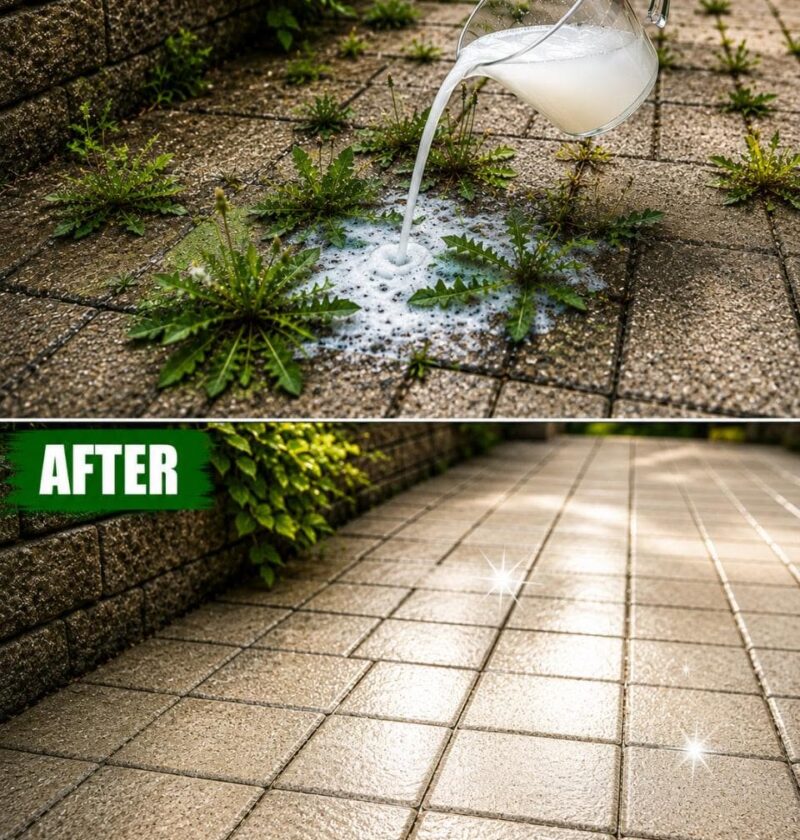
The claim “THIS burns weeds in 1 day! They NEVER grow again” is a common gardening clickbait claim. While some homemade or chemical weed killers can make weeds wilt or die quickly, no simple treatment can guarantee that weeds will never grow again.
What is actually true?
- Many weed-killing products work by damaging the leaves and stems, causing visible browning within hours or days.
- However, weeds can return because:
- Seeds already in the soil can germinate later.
- Some weeds have deep roots, bulbs, or underground stems that survive.
- Wind, birds, animals, and nearby gardens can introduce new seeds.
Common weed-control methods
1. Pulling weeds (especially when young)
- Remove as much of the root system as possible.
- Best after rain or watering when soil is softer.
2. Mulching
- A layer of organic mulch (such as wood chips or compost) can block sunlight and reduce new weed growth.
3. Boiling water
- Can kill small weeds growing in cracks or paths by damaging plant tissues.
- It is not a permanent solution and must be used carefully to avoid harming nearby plants.
4. Commercial herbicides
- Some are designed to kill existing weeds, while others prevent new weeds from emerging for a limited period.
- They should be used according to the label instructions to reduce risks to people, pets, and the environment.
Be cautious with “miracle” weed recipes
Mixtures using household ingredients such as vinegar or salt may kill visible weeds, but:
- They may not kill the roots of established weeds.
- Salt can damage soil and prevent desirable plants from growing.
- Strong vinegar products can irritate skin and eyes and may harm surrounding plants.
Bottom line: A weed can often be killed in a day or two, but a permanent “never grows again” weed cure does not exist. Long-term control usually requires a combination of removing existing weeds, preventing seeds from sprouting, and maintaining healthy ground cover.