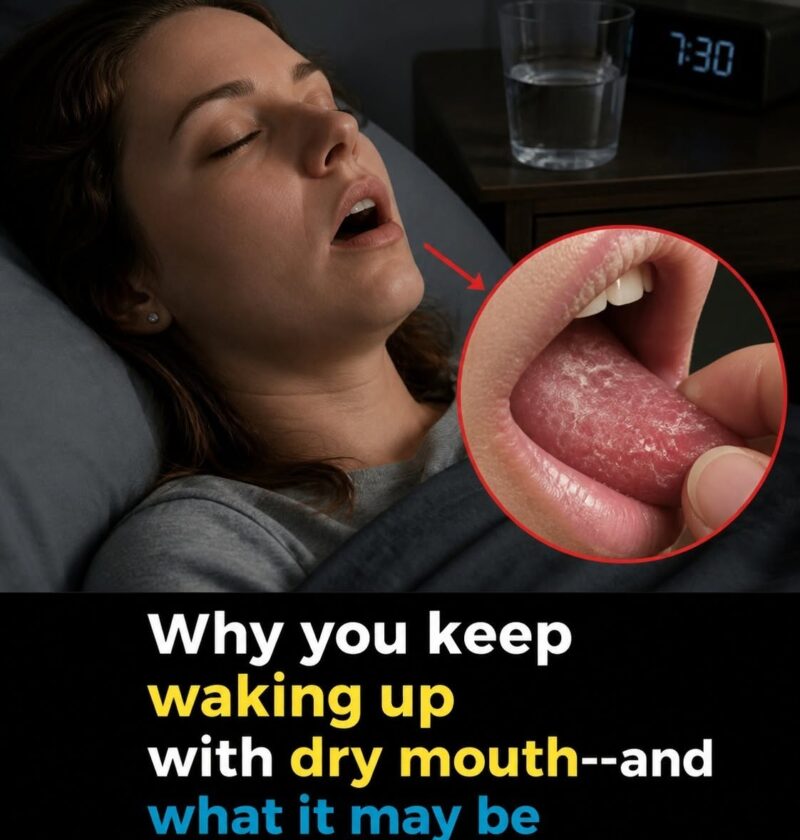
Waking up with a dry mouth is common, but it can be your body’s way of signaling changes in hydration, breathing, medications, or overall health. It is not always a sign of a serious problem, but frequent or persistent dry mouth is worth paying attention to.
Common reasons you may wake up with a dry mouth
- Breathing through your mouth while sleeping
- A blocked nose, allergies, congestion, or sleep position can cause you to breathe through your mouth overnight.
- Snoring or sleep apnea
- People who snore or have obstructed breathing during sleep often wake with a dry mouth.
- Other signs may include loud snoring, gasping during sleep, morning headaches, or daytime sleepiness.
- Not drinking enough fluids
- Mild dehydration can reduce saliva production.
- Medications
- Many medicines can cause dry mouth, including some allergy medicines, antidepressants, blood pressure medications, and certain pain medicines.
- Alcohol, caffeine, or smoking
- These can contribute to reduced saliva and dehydration.
- Dry indoor air
- Heating, air conditioning, or low humidity can dry the mouth overnight.
- Dental or oral issues
- Reduced saliva increases the risk of bad breath, cavities, and gum problems.
Things that may help
✅ Drink enough water during the day
✅ Consider using a humidifier if the air is dry
✅ Treat nasal congestion if present
✅ Practice good oral hygiene
✅ Limit alcohol and avoid smoking
✅ Review medications with a healthcare professional if dry mouth started after a new prescription
When to get checked
Talk with a healthcare professional or dentist if dry mouth:
- Happens almost every morning for weeks
- Causes difficulty swallowing or speaking
- Comes with increased thirst and frequent urination
- Is accompanied by mouth sores, tooth decay, or persistent bad breath
If you wake up with dry mouth plus snoring, choking/gasping at night, or daytime fatigue, it may be worth discussing possible sleep-related breathing problems.