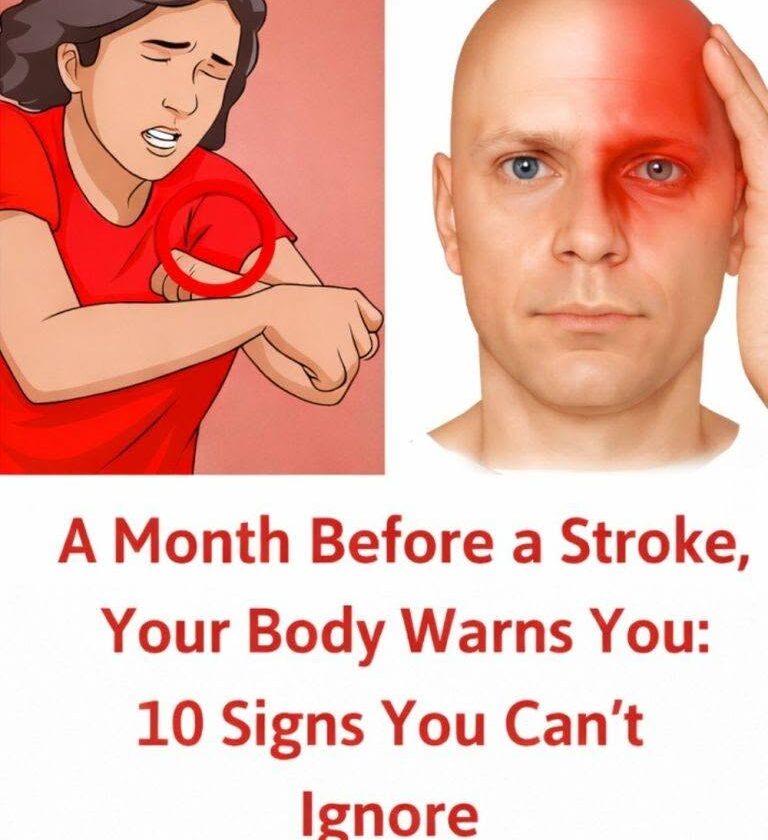
A Month Before a Stroke: Warning Signs You Should Not Ignore
There is a common claim that “your body warns you a month before a stroke.” While some people do experience symptoms before a stroke—especially a transient ischaemic attack (TIA), sometimes called a mini-stroke—there is no reliable countdown of one month. A stroke can happen suddenly, and warning symptoms may occur minutes, days, or weeks beforehand—or not at all.
A TIA is a medical warning sign because it can indicate a higher risk of a future stroke.
Possible Warning Signs to Take Seriously
1. Sudden Weakness or Numbness
Especially affecting:
- One side of the face
- One arm
- One leg
This is one of the most important stroke warning signs.
2. Face Drooping
One side of the face may:
- Droop
- Feel numb
- Look uneven when smiling
3. Speech or Language Problems
Watch for:
- Slurred speech
- Difficulty finding words
- Trouble understanding others
4. Sudden Vision Changes
These may include:
- Blurred vision
- Loss of vision in one or both eyes
- Double vision
5. Sudden Dizziness or Loss of Balance
Possible signs include:
- Trouble walking
- Loss of coordination
- Feeling unusually unsteady
6. Sudden Severe Headache
A sudden, intense headache—especially one described as the worst headache someone has experienced—can be a warning sign, particularly if it is accompanied by other neurological symptoms.
7. Temporary Symptoms That Go Away (TIA)
A TIA can cause stroke-like symptoms that disappear after minutes or hours, such as:
- Weakness
- Numbness
- Speech difficulty
- Vision problems
Even if symptoms disappear, medical assessment is important.
8. Confusion or Trouble Thinking
Sudden confusion, difficulty understanding information, or unusual behaviour changes can be concerning.
9. Trouble Swallowing
Sudden difficulty swallowing may occur when areas of the brain controlling these functions are affected.
10. Unexplained Changes in Movement
Examples include:
- New clumsiness
- Difficulty using a hand
- Sudden loss of coordination
Remember FAST
A quick way to recognise stroke symptoms:
F — Face: Is one side of the face drooping?
A — Arms: Can the person raise both arms?
S — Speech: Is speech strange or unclear?
T — Time: Call emergency services immediately.
Reducing Stroke Risk
You can lower risk by:
- Managing high blood pressure
- Not smoking
- Keeping cholesterol and blood sugar controlled
- Staying physically active
- Eating a balanced diet
- Taking prescribed medicines as directed
- Addressing irregular heart rhythms such as atrial fibrillation