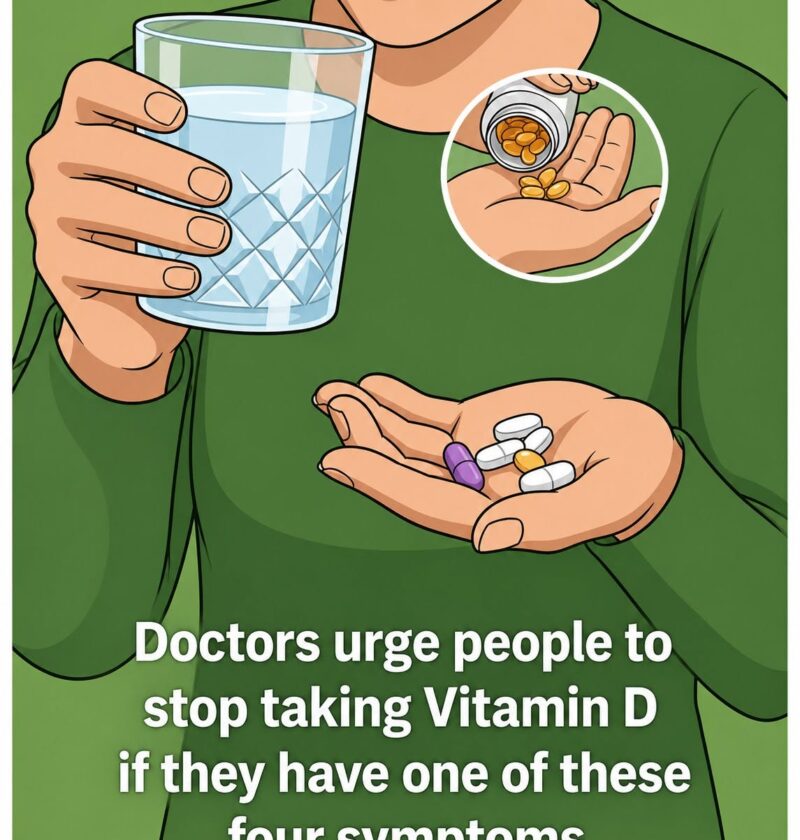
The headline “Important Warning from Doctors: Stop Taking Vitamin D Immediately If You Have These 4 Symptoms” is attention-grabbing, but it oversimplifies a real medical issue.
For most people, vitamin D is safe when taken at recommended doses. Problems usually occur when someone takes very high doses of vitamin D supplements for weeks or months, leading to vitamin D toxicity (hypervitaminosis D). This causes high blood calcium levels (hypercalcemia).
Four symptoms that may suggest vitamin D toxicity
- Nausea, vomiting, or loss of appetite
- High calcium levels can cause digestive upset.
- Excessive thirst and frequent urination
- The kidneys work harder to remove excess calcium, leading to dehydration.
- Weakness, fatigue, confusion, or difficulty concentrating
- Elevated calcium can affect the brain and muscles.
- Kidney problems
- Symptoms may include flank pain, kidney stones, or reduced kidney function.
What should you do?
- Do not take more vitamin D if you think you may have toxicity.
- Contact your healthcare professional promptly, especially if you’re taking high-dose supplements (such as 10,000 IU daily for a prolonged period or prescription-strength doses).
- Your clinician may order blood tests to measure 25-hydroxyvitamin D, calcium, and kidney function.
Don’t stop prescribed vitamin D without advice
If you’re taking vitamin D because a healthcare professional diagnosed a deficiency or another medical condition, don’t stop it solely because of an online headline. Toxicity is uncommon at standard recommended doses.
Seek urgent medical care if you have:
- Severe vomiting
- Confusion or difficulty staying awake
- Severe weakness
- Chest pain or an irregular heartbeat
- Signs of severe dehydration
If you tell me:
- Your vitamin D dose (for example, 1,000 IU daily, 5,000 IU daily, or 50,000 IU weekly),
- How long you’ve been taking it, and
- Whether you’re having any symptoms,
I can help you understand whether your dose is within the typical range or whether it would be reasonable to discuss testing with your healthcare professional.