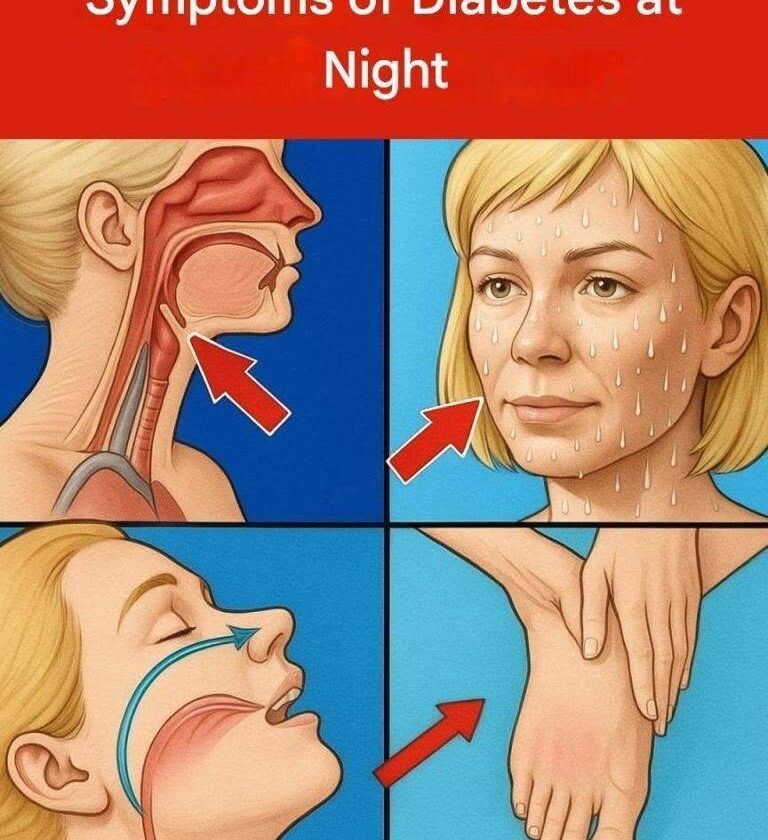
5 Diabetes Symptoms That May Appear at Night
Diabetes symptoms can sometimes become more noticeable overnight because changes in blood sugar can affect fluid balance, sleep, and nerve function. These signs do not always mean you have diabetes, but if they are persistent or occur together, it is worth discussing with a healthcare professional.
1. Waking Up Frequently to Urinate
Needing to get up several times during the night to urinate can be a sign of high blood sugar.
Why it happens:
- When blood glucose is too high, the kidneys try to remove excess sugar through urine.
- This can lead to increased urine production.
2. Excessive Thirst at Night
Some people wake up with:
- A very dry mouth
- Strong thirst
- A need to drink water repeatedly
This may happen because frequent urination causes the body to lose more fluid.
3. Night Sweats, Shaking, or Sudden Anxiety
For people taking insulin or certain diabetes medicines, blood sugar may sometimes drop too low during sleep.
Possible signs of nighttime low blood sugar include:
- Sweating
- Trembling
- Fast heartbeat
- Nightmares
- Waking up suddenly feeling confused or anxious
4. Poor Sleep and Feeling Exhausted the Next Day
Blood sugar fluctuations may contribute to:
- Trouble staying asleep
- Frequent waking
- Feeling tired despite enough hours in bed
Sleep problems can also affect blood sugar control, creating a cycle that can be difficult to break.
5. Tingling, Burning, or Numb Feet at Night
Long-term high blood sugar can damage nerves, a condition called diabetic neuropathy.
Symptoms may include:
- Pins and needles
- Burning sensations
- Numbness
- Foot pain that becomes more noticeable at night
Other Diabetes Warning Signs
Other possible symptoms include:
- Increased hunger
- Unexplained weight loss
- Blurred vision
- Slow-healing cuts or sores
- Frequent infections
- Persistent tiredness
When to Get Checked
Consider speaking with a healthcare professional if you have ongoing symptoms, especially if you have risk factors such as:
- Family history of diabetes
- High blood pressure
- Excess weight
- History of gestational diabetes
- Limited physical activity
A blood test such as HbA1c or fasting blood glucose can help determine whether blood sugar levels are in the diabetes or prediabetes range.
Bottom Line