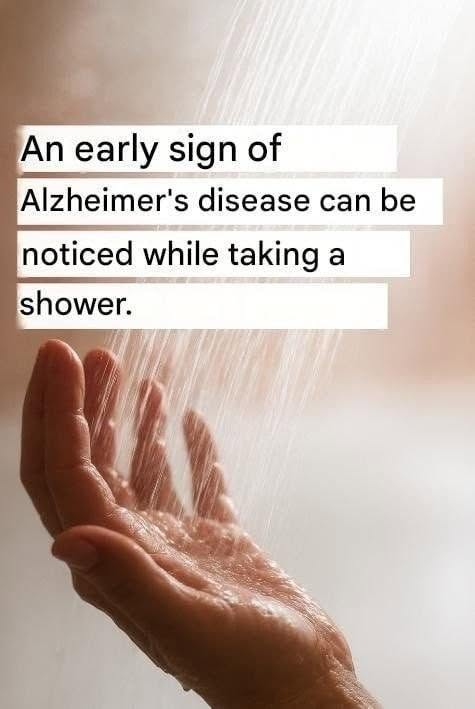
The claim “An early sign of Alzheimer’s disease can be noticed while taking a shower” is oversimplified and can be misleading.
There is no single shower-related behavior that reliably indicates early Alzheimer’s disease. However, changes in bathing habits can sometimes be one of many signs that a person is having cognitive difficulties.
Examples that may be concerning if they represent a new change include:
- Forgetting whether they have already showered.
- Difficulty remembering the steps involved in bathing.
- Confusion about how to use familiar items like shampoo or soap.
- Avoiding showers because the task feels confusing or overwhelming.
- Needing much more help with bathing than they previously did.
These changes are not specific to Alzheimer’s disease. They can also result from:
- Normal aging.
- Depression.
- Medication side effects.
- Vision or hearing problems.
- Arthritis or other physical limitations.
- Other medical conditions affecting memory or thinking.
Early Alzheimer’s disease is more commonly associated with symptoms such as:
- Frequently forgetting recently learned information.
- Repeatedly asking the same questions.
- Misplacing items and being unable to retrace steps.
- Difficulty planning or solving familiar problems.
- Trouble following conversations or finding the right words.
- Becoming disoriented in familiar places.
If someone develops persistent changes in memory, thinking, or their ability to perform everyday activities like bathing, cooking, or managing medications, it’s important to seek a medical evaluation. Early assessment can help identify whether Alzheimer’s disease, another form of dementia, or a different—and sometimes treatable—condition is responsible.