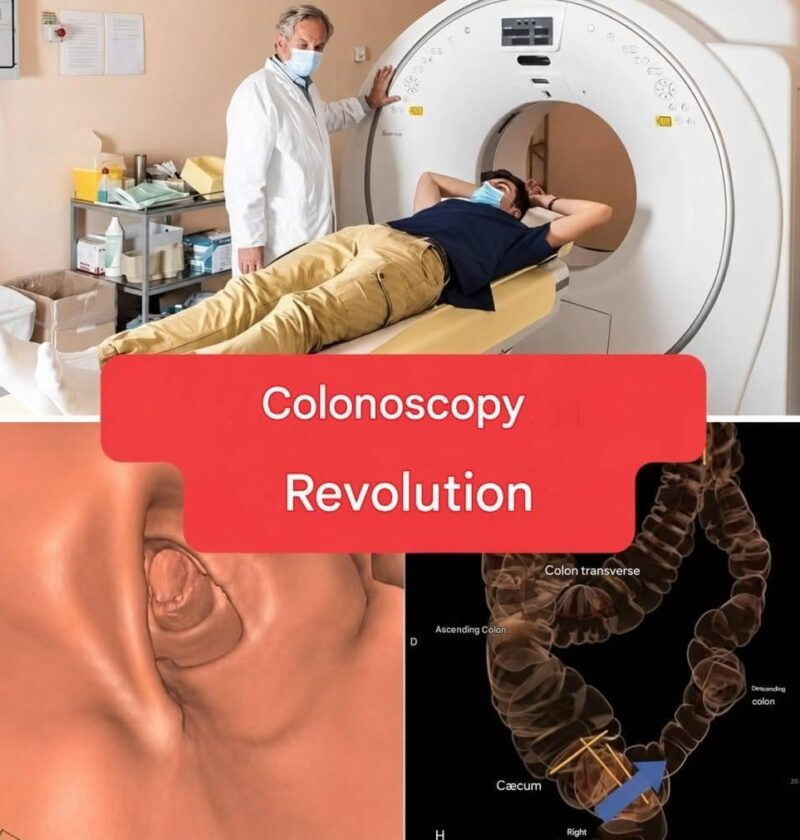
The claim that “colonoscopy will no longer be an invasive examination” refers to newer approaches being developed to make colorectal cancer screening easier and less uncomfortable. However, traditional colonoscopy is still widely used and remains an important diagnostic tool.
Some newer or less invasive options include:
1. Stool-based tests
- Fecal immunochemical tests (FIT) detect hidden blood in stool.
- Stool DNA tests look for DNA changes associated with colorectal cancer.
- These can be done at home, but a positive result usually requires a follow-up colonoscopy.
2. CT colonography (“virtual colonoscopy”)
- Uses CT imaging to create pictures of the colon.
- It does not require a scope to be inserted through the entire colon.
- It may still require bowel preparation, and if suspicious polyps are found, a regular colonoscopy may be needed for removal.
3. Capsule colonoscopy
- A person swallows a small camera capsule that travels through the digestive tract and captures images.
- It is less invasive, but availability and suitability vary, and it may not replace colonoscopy for everyone.
4. Future blood tests and advanced screening methods
- Researchers are studying blood-based biomarkers and other technologies that may help detect colorectal cancer earlier.
- These methods are still being evaluated and are not replacements for colonoscopy in routine care.
Why colonoscopy is still valuable
A colonoscopy can do two things at once:
- Find abnormalities, such as polyps.
- Remove many precancerous polyps immediately during the same procedure.
If you are due for colorectal cancer screening, the best option depends on your age, risk factors, family history, previous test results, and local medical guidelines. A healthcare professional can help choose the appropriate screening method.