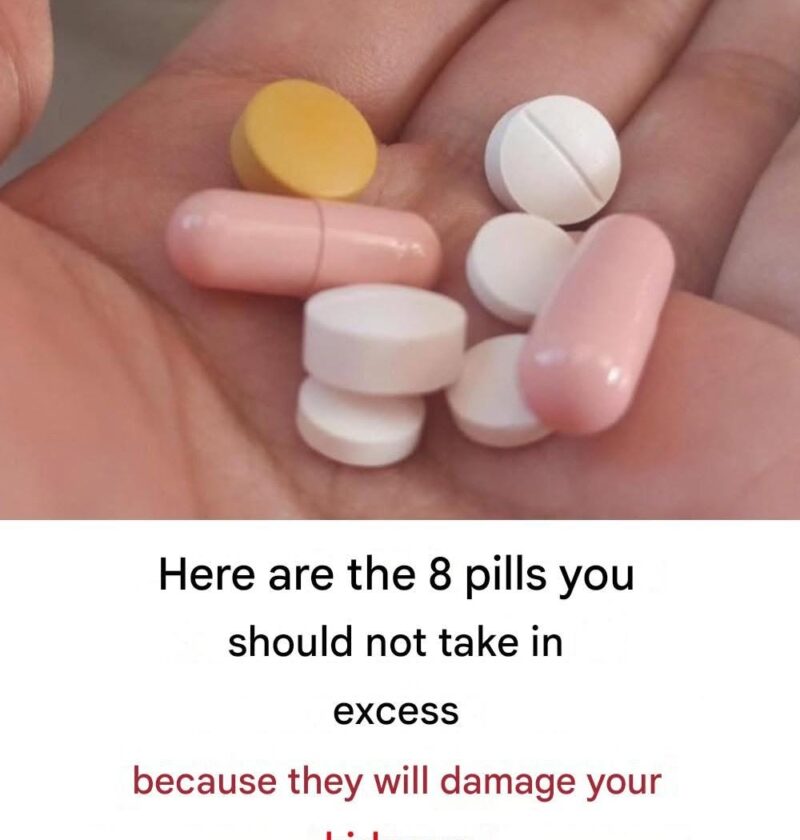
Claims like “eight pills you shouldn’t take because they damage your kidneys” can be misleading. Many medications can affect kidney function in certain situations, especially with high doses, long-term use, dehydration, older age, or pre-existing kidney disease—but most are safe when used correctly and monitored.
Medication groups that are commonly associated with kidney risks include:
- Nonsteroidal anti-inflammatory drugs (NSAIDs)
- Examples: ibuprofen, naproxen, diclofenac
- Can reduce blood flow to the kidneys and may trigger kidney injury, especially with frequent use or in people with kidney disease, heart failure, dehydration, or older age.
- Certain antibiotics
- Some antibiotics can stress or injure the kidneys, particularly in vulnerable patients.
- Examples include some aminoglycosides and other drugs that require dose adjustment for kidney function.
- Some blood pressure medicines
- Medicines that affect the kidney’s blood flow or fluid balance may change kidney function tests.
- Examples include ACE inhibitors, ARBs, and diuretics; these are often beneficial but may need monitoring.
- Certain acid-reducing medicines
- Long-term use of some proton pump inhibitors (PPIs) has been associated in studies with kidney problems in some people.
- Certain antiviral medications
- Some antiviral drugs can affect kidney function and require monitoring.
- Lithium
- A medication used for bipolar disorder that can affect kidney function with long-term use and requires regular blood tests.
- Some chemotherapy medications
- Certain cancer treatments can be harmful to the kidneys and require protective measures and monitoring.
- High-dose or inappropriate use of supplements
- Some herbal products or supplements may contain substances that can harm the kidneys or interact with medications.
Ways to protect your kidneys
- Avoid taking painkillers frequently without medical advice.
- Stay hydrated, especially during illness or heat exposure.
- Tell healthcare providers about all medications and supplements you take.
- Have kidney function checked if you take long-term medications that can affect the kidneys.
Do not stop prescribed medicines suddenly because of a general warning list. If you share your age, kidney condition (if any), and the exact pills you take, I can help identify which ones may need monitoring.