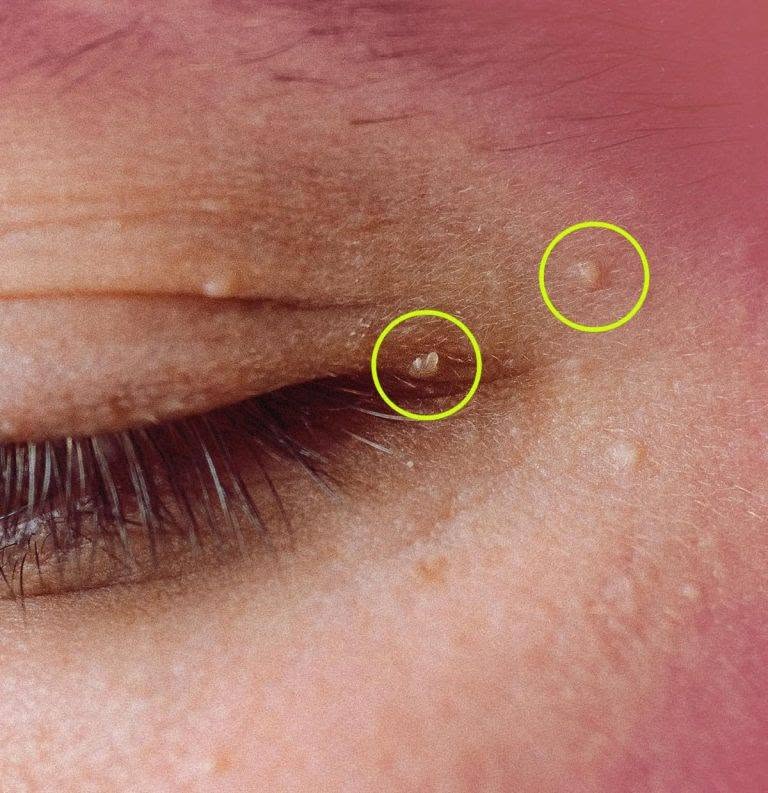
Milia are tiny, white or yellowish bumps that commonly appear around the eyes, cheeks, nose, or forehead. Despite how they’re often described online, they are not fat cysts. They are small cysts filled with keratin, a protein found in skin, hair, and nails.
How to get rid of milia
Many milia disappear on their own over time, especially in infants. In adults, they may persist without treatment.
You can help prevent or reduce milia by:
- Using a gentle cleanser daily.
- Exfoliating gently with products containing salicylic acid, glycolic acid, or lactic acid (if your skin tolerates them).
- Using a retinoid (such as over-the-counter retinol or a prescription retinoid) if appropriate for your skin.
- Avoiding heavy, occlusive creams around the eyes if they seem to contribute.
What not to do
- Don’t squeeze or pick at milia. Unlike pimples, they usually won’t pop and trying to remove them yourself can cause scarring or infection.
- Avoid using harsh scrubs or home remedies that irritate the skin.
Professional treatment
A dermatologist can safely remove persistent milia using a sterile needle or a tiny incision to extract the keratin. In some cases, treatments such as electrocautery, laser therapy, or chemical peels may be recommended, depending on the type and number of lesions.
When to seek medical advice
See a healthcare professional if:
- The bumps are changing rapidly, bleeding, or painful.
- They become red or infected.
- You’re unsure whether they’re milia or another skin condition.
- They persist and you would like them removed safely.
Milia are benign and not contagious, so treatment is usually done for cosmetic reasons rather than because they are harmful.