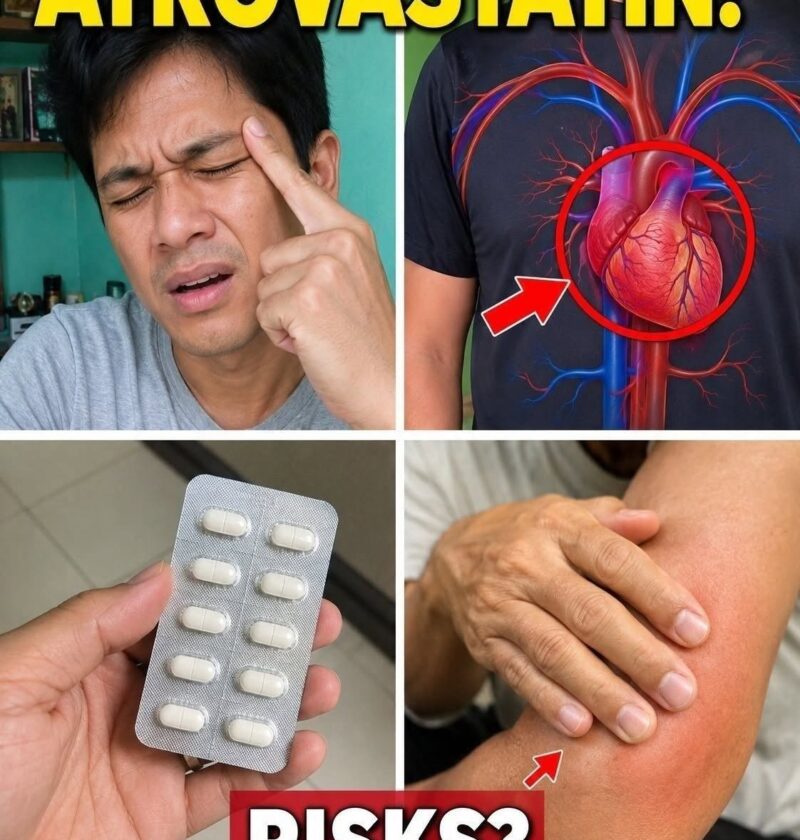
Atorvastatin is a statin medication used to lower LDL (“bad”) cholesterol and reduce the risk of heart attack and stroke. It’s generally well-tolerated, but like all medicines, it can cause side effects in some people.
Here’s what you should know in a clear, practical way:
👍 Common side effects (usually mild)
These may improve as your body adjusts:
- Muscle aches or mild muscle soreness
- Headache
- Nausea or indigestion
- Diarrhea or constipation
- Fatigue
Most people who experience these symptoms can continue the medication, but they should still be monitored.
⚠️ Less common but important side effects
1. Muscle problems (myopathy)
- Muscle pain, weakness, or tenderness
- More concerning if it affects large muscle groups or worsens over time
In rare cases, this can progress to a serious condition called rhabdomyolysis, where muscle breakdown can harm the kidneys.
🚩 Warning signs:
- Severe muscle pain
- Dark (cola-colored) urine
- Extreme weakness
2. Liver enzyme changes
Hepatitis-like inflammation is rare, but statins can affect liver enzymes.
Possible signs:
- Yellowing of skin or eyes (jaundice)
- Dark urine
- Upper right abdominal pain
- Unusual fatigue
Doctors often monitor liver function with blood tests, especially after starting or increasing the dose.
3. Blood sugar increase
Statins may slightly increase blood sugar levels and, in some people, contribute to developing Type 2 Diabetes—especially if they already have risk factors.
🧠 Rare side effects
- Memory issues or confusion (usually reversible)
- Sleep disturbances
- Allergic reactions (rash, itching, swelling)
🚨 When to seek medical help
Contact a doctor urgently if you experience:
- Severe unexplained muscle pain or weakness
- Signs of liver problems (yellow skin/eyes)
- Severe fatigue with dark urine
- Chest pain or breathing difficulty
🧾 Key takeaway
For most people, atorvastatin significantly lowers cardiovascular risk with a relatively low risk of serious side effects, especially when monitored properly.
If you want, I can also explain:
- How to reduce statin side effects naturally
- Whether muscle pain is actually from statins or something else
- Safer alternatives if someone can’t tolerate it