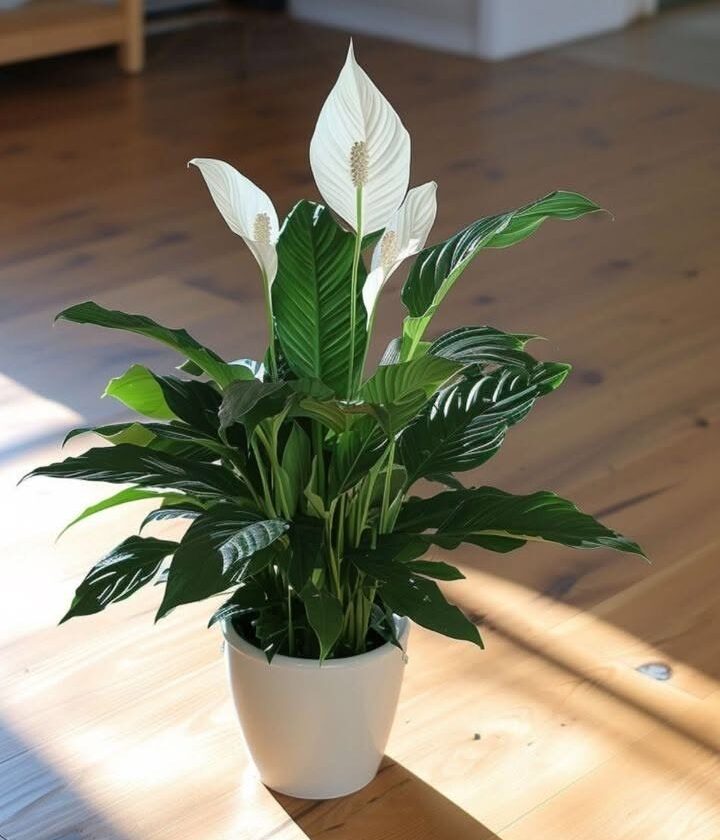
A peace lily can produce beautiful white blooms when its basic needs are balanced. If your plant has lots of leaves but no flowers, try these 11 ways to encourage blooming:
1. Provide bright, indirect light
Peace lilies often fail to bloom when kept in low light. Place your plant near a bright window with filtered light, but avoid harsh direct sunlight.
2. Avoid overwatering
Keep the soil slightly moist, not soggy. Too much water can stress the roots and reduce flowering.
3. Water at the right time
Water when the top 2–3 cm (about 1 inch) of soil feels dry. Don’t wait until the plant is severely wilted.
4. Improve drainage
Use a pot with drainage holes and well-draining soil to prevent root problems.
5. Feed during the growing season
Use a balanced houseplant fertilizer occasionally. Too much nitrogen can encourage leaves instead of flowers.
6. Increase humidity
Peace lilies enjoy humid air. A humidifier, a pebble tray, or grouping plants together can help.
7. Keep temperatures comfortable
Avoid cold drafts and sudden temperature changes. Peace lilies generally prefer warm indoor conditions.
8. Repot if the roots are overcrowded
A severely root-bound plant may struggle to grow and bloom. Repot into a slightly larger container when needed.
9. Clean the leaves
Dusty leaves reduce the plant’s ability to absorb light. Wipe leaves gently with a damp cloth.
10. Remove old blooms
Cut off faded flowers and yellowing leaves so the plant can direct energy toward new growth.
11. Be patient and consistent
Peace lilies bloom in cycles. After improving care, it may take weeks or months before new flowers appear.
Common reason for “no blooms”: A healthy peace lily with green leaves but no flowers often needs more light rather than more fertilizer.