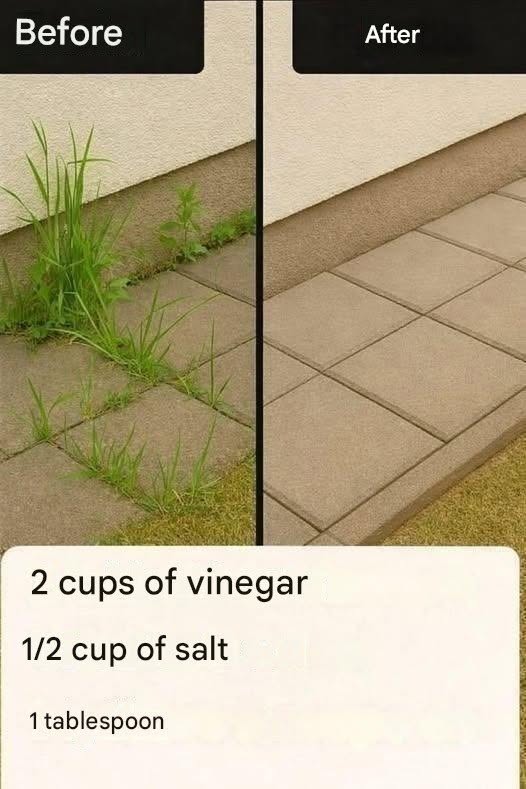
A lot of “super-effective homemade herbicide” posts online are overselling it. Home remedies can kill small weeds, but they are usually non-selective (they kill anything they touch) and often less reliable than commercial weed killers.
Here are the most commonly used home methods and what you should realistically expect:
1) Vinegar-based spray (most popular)
Household vinegar (acetic acid) can dry out and burn young weeds.
- Works best on: small, young weeds in cracks/driveways
- Weakness: usually doesn’t kill roots, so weeds may regrow
Some people mix vinegar with a small amount of dish soap to help it stick to leaves, but it still remains a surface-level solution.
2) Boiling water (simple but effective)
- Pouring boiling water directly on weeds kills plant tissue instantly
- Works best on: sidewalk cracks, gravel areas
- Limitation: also kills nearby plants and doesn’t prevent regrowth long-term
3) Salt solutions (use with caution)
Salt can kill weeds by dehydrating them.
- Works, but:
- Can damage soil for a long time
- Can prevent anything from growing in that area afterward
Because of this, it’s usually not recommended in gardens or lawns.
4) Manual + prevention (most effective long-term)
- Pulling weeds (especially after rain)
- Mulching garden beds
- Blocking sunlight with cardboard or thick mulch
This is what actually gives lasting control.
Important reality check
- There is no truly “super-effective homemade herbicide” that matches professional weed killers in power and safety.
- Many viral recipes (like bleach, strong salt mixes, or acids) can damage soil, water runoff areas, and nearby plants.
Bottom line
If you want quick spot control: vinegar or boiling water works.
If you want long-term weed control: mulching and prevention beat all DIY sprays.
If you tell me where you’re trying to remove weeds (lawn, driveway, garden beds), I can suggest the safest and most effective approach for that exact situation.