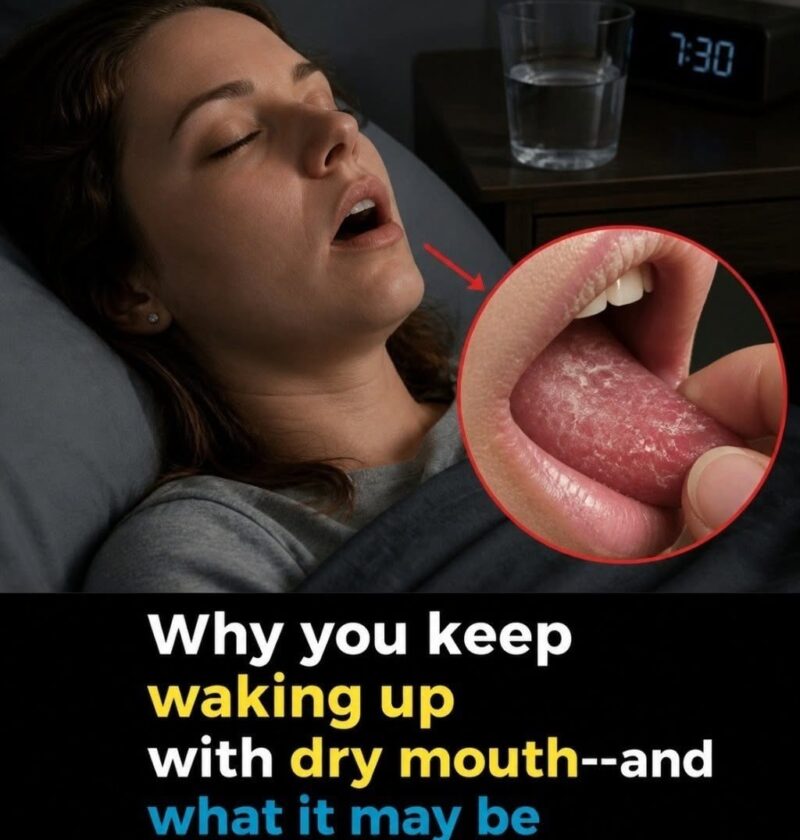
Waking up with a dry mouth is common and is often caused by something harmless, but if it happens frequently it can also point to an underlying issue.
Possible causes include:
- Sleeping with your mouth open
- Often due to nasal congestion, allergies, or a deviated nasal septum.
- Dehydration
- Not drinking enough fluids, sweating a lot, or drinking alcohol can contribute.
- Medications
- Many medicines can reduce saliva production, including some antihistamines, antidepressants, blood pressure medications, and bladder medications.
- Snoring or obstructive sleep apnea
- Dry mouth is common in people who snore or have sleep apnea, especially if they breathe through their mouth at night.
- Diabetes
- High blood sugar can cause increased thirst and dry mouth, particularly if accompanied by frequent urination.
- Salivary gland disorders or autoimmune conditions
- Conditions such as Sjögren syndrome can reduce saliva production and cause persistent dry mouth and dry eyes.
What you can do
- Stay well hydrated throughout the day.
- Address nasal congestion if it’s causing mouth breathing.
- Avoid alcohol and tobacco, especially before bed.
- Consider using a bedroom humidifier if the air is very dry.
- Practice good oral hygiene, since reduced saliva increases the risk of cavities.
When to see a healthcare professional
Consider an evaluation if:
- Dry mouth occurs most mornings for several weeks.
- You also have loud snoring, pauses in breathing during sleep, or excessive daytime sleepiness.
- You have persistent dry eyes, difficulty swallowing, frequent cavities, or mouth sores.
- You have symptoms such as excessive thirst, frequent urination, or unexplained weight loss.
Occasional morning dry mouth is usually not serious, but persistent symptoms are worth discussing with a healthcare professional because treatment depends on the underlying cause.