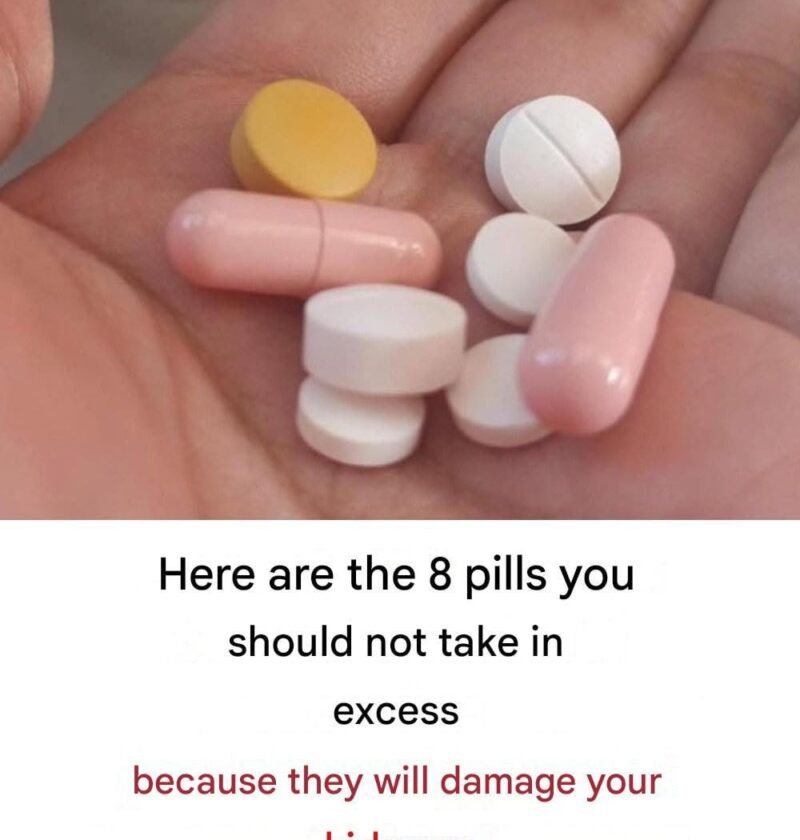
The claim that there are “eight pills you shouldn’t take because they damage your kidneys” is a common online warning, but it needs context. Many medications can affect kidney function in certain people, especially those who are older, dehydrated, have existing kidney disease, or take multiple medicines. That does not mean everyone should stop taking them.
Medication groups that commonly require kidney caution include:
- NSAID pain relievers
Examples: ibuprofen and naproxen- Can reduce blood flow to the kidneys and may contribute to kidney injury, especially with long-term use or in high-risk people.
- Certain antibiotics
- Some antibiotics can stress the kidneys or require dose adjustments when kidney function is reduced.
- Some blood pressure medicines
- ACE inhibitors, ARBs, and diuretics can change kidney function or electrolyte levels and often require monitoring.
- Certain water pills (diuretics)
- Can cause dehydration or electrolyte imbalances that affect kidney health.
- Some antiviral medications
- Certain drugs used for viral infections may need kidney monitoring.
- Lithium
- A medication used for bipolar disorder that can affect kidney function with long-term use and requires regular blood tests.
- Some chemotherapy medicines
- Certain cancer treatments can be harmful to kidneys and require monitoring.
- High-dose or unregulated supplements
- Some herbal products or supplements may contain substances that can stress the kidneys or interact with medications.
Protect your kidneys
- Avoid taking pain medicines more often or at higher doses than recommended.
- Stay hydrated, especially during illness or hot weather.
- Tell healthcare professionals about all medicines and supplements you take.
- Ask whether kidney function should be checked if you use medications long term.
Do not stop a prescribed medication without speaking with the prescriber. If you share the specific “eight pills” list you saw—or the medicines you take—I can help check which warnings are accurate and which are exaggerated.