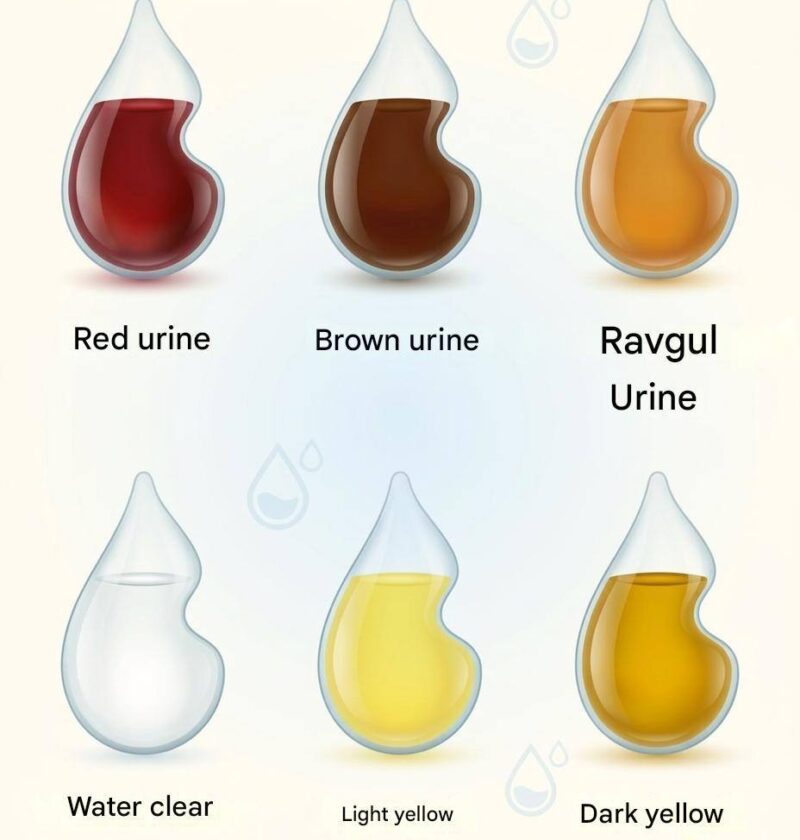
Urine color can reflect hydration, diet, medications, and sometimes underlying health conditions. A one-time color change is often harmless, but persistent or unexplained changes can be important.
Here’s a general guide:
| Urine color | Common meaning | Possible causes |
|---|---|---|
| Pale yellow to straw | Usually healthy and well hydrated | Normal urine pigment (urochrome) |
| Completely clear | Very hydrated | Drinking lots of water; sometimes overhydration |
| Dark yellow or amber | Dehydration | Not enough fluids, sweating, fever |
| Orange | Concentrated urine or liver/bile issues in some cases | Dehydration, vitamins (especially B vitamins), some medications |
| Pink or red | Blood, food, or medication | Beets, berries, food dyes, urinary tract bleeding, kidney stones |
| Brown or cola-colored | Severe dehydration or liver/muscle problems | Certain medications, liver disease, muscle breakdown |
| Blue or green | Often harmless but unusual | Food dyes, medications, rare infections |
| Cloudy or milky | Possible infection or crystals | Urinary tract infection, kidney stones, dehydration |
| Foamy or bubbly | Sometimes harmless, sometimes excess protein | Fast urination, dehydration, kidney disease if persistent |
When to seek medical attention
Contact a healthcare professional if you notice:
- Blood in urine
- Persistent dark brown, red, or orange urine
- Pain or burning when urinating
- Fever or back pain
- Strong foul odor with symptoms
- Persistent foamy urine
- Sudden major changes lasting more than a couple of days
Certain conditions linked to urine changes include:
- Urinary Tract Infection
- Kidney Stones
- Liver Disease
- Chronic Kidney Disease
- Diabetes Mellitus
Some medications can also affect urine color, including:
- Rifampin
- Phenazopyridine
- Ibuprofen
If you want, you can tell me the specific urine color or any other symptoms you’re noticing, and I can help narrow down the most likely explanations.