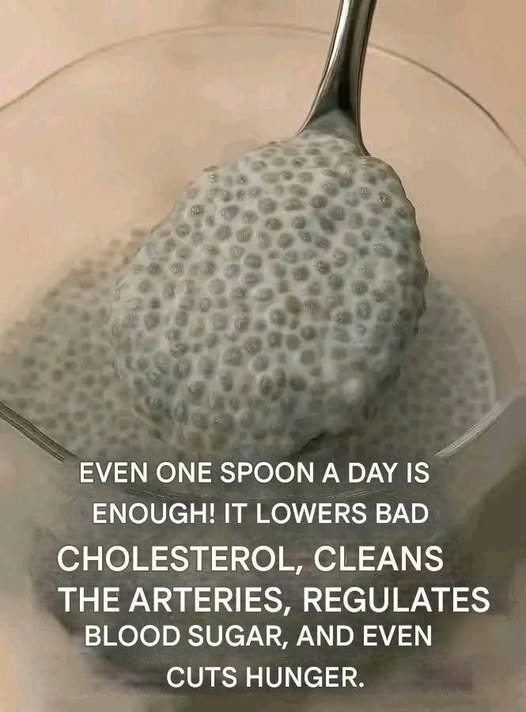
That kind of claim is a classic example of “miracle food” marketing—and it doesn’t hold up medically as stated.
No single ingredient, taken as one spoonful a day, can reliably:
- “clean arteries”
- “lower bad cholesterol on its own in a dramatic way”
- “regulate blood sugar by itself”
- “suppress hunger in a meaningful metabolic way for everyone”
What is true in a more realistic sense is that some foods can contribute modestly to health when they replace worse habits. For example:
- Healthy fats (like olive oil, nuts) can slightly improve cholesterol when they replace saturated fats
- Fiber-rich foods can help with satiety and blood sugar control
- Some dietary patterns (Mediterranean-style eating) improve heart markers over time
But those effects come from overall diet and lifestyle, not a daily “one spoon cures everything” approach.
Also, “cleans arteries” is misleading. Artery plaque doesn’t get “washed away” by a food. In real medicine, reducing risk involves long-term factors like diet pattern, exercise, genetics, and sometimes medication.
If you tell me what the “spoonful” actually is (honey, olive oil, apple cider vinegar, chia seeds, etc.), I can break down what it does and doesn’t realistically do.