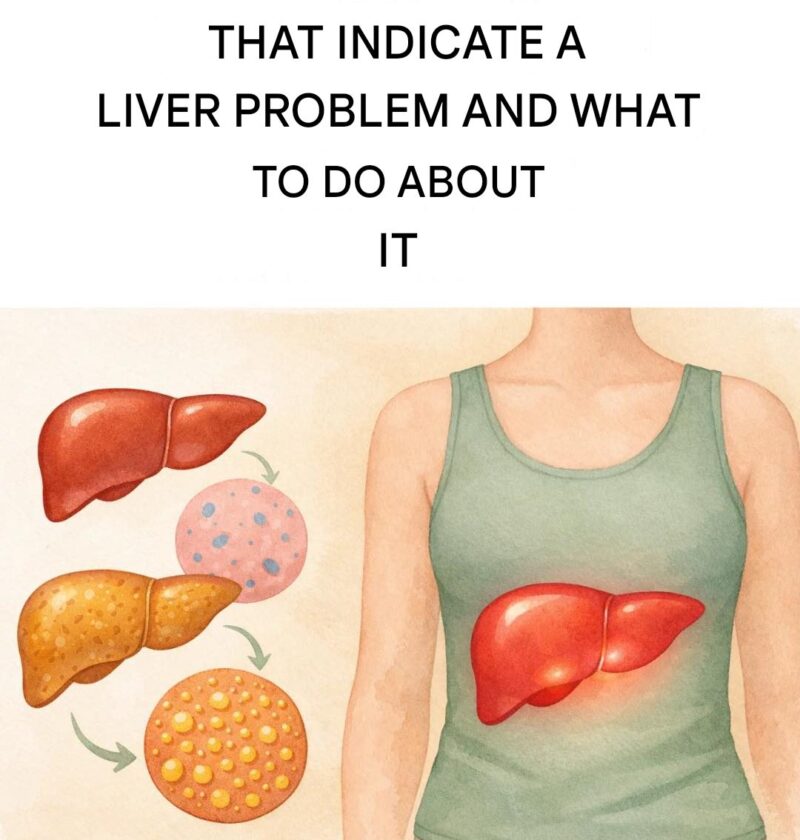
Liver problems often develop quietly at first, then become more obvious as the liver’s ability to filter toxins, produce bile, and process nutrients starts to decline. The symptoms can overlap with other conditions, so the key is noticing patterns rather than a single sign.
Here are 8 common symptoms that may indicate a liver problem, along with what they usually mean and what to do about them:
1. Yellowing of skin or eyes (jaundice)
When the liver can’t properly process bilirubin, it builds up in the blood and causes a yellow tint in the skin and whites of the eyes. This is a classic sign of conditions like Hepatitis or bile duct blockage.
What to do: Seek medical evaluation promptly. Blood tests for liver enzymes and bilirubin are usually needed.
2. Dark urine
Urine may turn tea- or cola-colored because excess bilirubin is being filtered out by the kidneys.
What to do: If this persists for more than a day or two (especially with jaundice), get liver function tests done.
3. Pale or clay-colored stool
When bile flow is reduced, stool loses its normal brown color.
What to do: This can indicate bile duct or liver issues and should be checked by a doctor.
4. Persistent fatigue and weakness
A struggling liver affects metabolism and toxin removal, leading to constant tiredness.
What to do: If fatigue is ongoing and unexplained, especially with other symptoms, request liver function testing.
5. Abdominal pain or swelling (especially right upper side)
The liver sits under the right rib cage. Inflammation or enlargement can cause discomfort or a feeling of fullness.
This is seen in conditions like Cirrhosis or fatty liver disease.
What to do: Persistent pain or swelling should be evaluated with imaging (ultrasound or CT scan).
6. Easy bruising or bleeding
The liver produces clotting factors. When it’s impaired, even minor bumps may cause bruises or bleeding gums/nosebleeds.
What to do: This is a warning sign of significant liver dysfunction—medical attention is important.
7. Swelling in legs or abdomen (edema or ascites)
Fluid buildup happens when the liver can’t regulate proteins and circulation properly.
What to do: This often indicates advanced liver disease and requires urgent medical care.
8. Itchy skin (without rash)
Bile salts accumulating in the skin can cause intense itching, especially at night.
What to do: Don’t ignore persistent itching; liver and bile tests may be required.
What you should do if you notice these symptoms
If you recognize one mild symptom, monitor it briefly and review lifestyle factors (alcohol use, medications, fatty foods, viral exposure).
If you notice two or more symptoms together, or symptoms lasting more than a few days:
- Get liver function tests (LFTs)
- Ask for hepatitis screening
- Consider ultrasound of the liver
- Review any medications or supplements with a doctor
Treatment depends on the cause
Liver problems are not a single disease—they’re a group of conditions. Treatment may include:
- Lifestyle changes (diet, weight control, stopping alcohol)
- Antiviral drugs for hepatitis infections
- Medications to reduce inflammation or fluid buildup
- In advanced cases, specialized hospital care
If you want, I can also explain:
- early signs of fatty liver (very common and reversible)
- how to protect your liver daily
- or how liver function tests are interpreted step-by-step