Complete Orchid Blooming Guide: Proven Methods to Encourage Long-Lasting Flowers
🌿 Understanding Orchid Blooming Behavior (Why Orchids Don’t Follow “Quick Fix” Rules)
Orchids are among the most elegant flowering plants, but they are also highly sensitive to environmental conditions. Unlike typical houseplants, orchids do not respond to single-dose fertilizers or one-time treatments for continuous flowering.
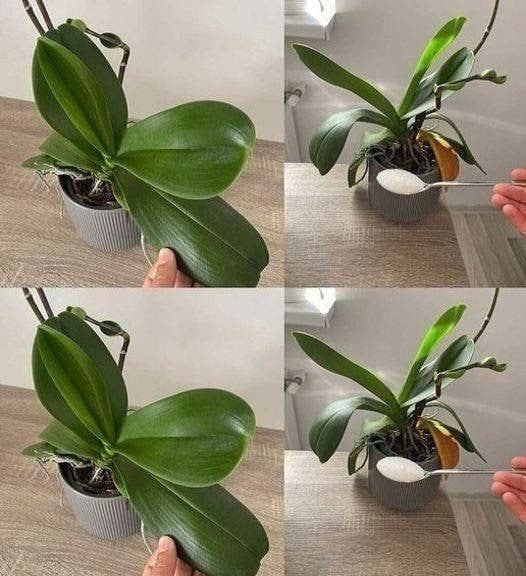
The idea that “one tablespoon of something guarantees continuous blooming” is misleading because orchids bloom based on a cycle of energy storage, rest, and environmental triggers.
Most commonly grown orchids such as Phalaenopsis (moth orchids) follow natural blooming cycles that depend on seasonal light and temperature shifts rather than instant nutrient boosts.
To achieve consistent blooming, growers must understand that orchid flowering is a result of balanced care over time, not a one-time application.
🌱 Natural Factors That Trigger Orchid Flowers
☀️ 1. Light Exposure Is the Most Important Factor
Orchids need bright, indirect light. Without proper lighting:
- Leaves become dark green (too little light)
- Flowers fail to form
- Growth becomes slow and weak
A north or east-facing window is usually ideal for most indoor orchids.
🌡️ 2. Temperature Difference Encourages Blooming
One of the most important blooming triggers is a temperature drop between day and night.
For many orchids:
- Day: warm conditions (20–28°C)
- Night: cooler conditions (15–20°C)
This difference signals the plant to begin flower spike development.
💧 3. Proper Watering Routine (Not Overwatering)
Orchids prefer:
- Watering once roots become silvery or dry
- Well-draining pots with airflow
- No standing water
Overwatering is the most common reason orchids stop blooming because it damages roots.
🌬️ 4. Air Circulation Supports Healthy Growth
Orchids naturally grow in humid, airy environments. Good airflow:
- Prevents root rot
- Reduces fungal infections
- Encourages strong flower spikes
🪴 5. Healthy Roots = More Flowers
Orchid roots are not just support—they perform photosynthesis.
Healthy roots should be:
- Firm and green when wet
- Silver-gray when dry
Damaged roots = fewer or no blooms.
🌼 Fertilizing Orchids the Right Way (Why “One Spoon” Is Misleading)
Instead of a single large dose, orchids need light, consistent feeding.
A balanced orchid fertilizer (such as 20-20-20 or orchid-specific blends) should be:
- Diluted to weak strength
- Applied every 2–3 weeks during active growth
- Reduced during dormancy
Too much fertilizer can burn roots and actually stop flowering.
🌺 Seasonal Care for Continuous Orchid Blooms
Spring and Summer (Growth Phase)
- Increase watering slightly
- Feed regularly (diluted fertilizer)
- Maintain bright indirect light
Autumn (Bloom Trigger Phase)
- Allow cooler night temperatures
- Reduce nitrogen-heavy feeding
- Maintain stable moisture
Winter (Rest and Flowering Phase)
- Minimal fertilizing
- Controlled watering
- Protect from cold drafts
🌸 Why Orchids Stop Blooming (Common Mistakes)
Many people believe orchids need a special “secret ingredient,” but in reality flowering stops due to:
- Lack of light
- Overwatering
- Root rot
- No temperature variation
- Excess fertilizer
Fixing these conditions is far more effective than any single spoon-based method.
🌼 Realistic Expectations for Orchid Blooming
Even with perfect care:
- Orchids typically bloom 1–2 times per year
- Flowers can last several weeks to months
- Continuous blooming is not natural for most species
However, with proper care, you can encourage repeated seasonal blooming for many years.
🌿 Final Conclusion
Orchids do not respond to quick fixes like “one tablespoon guarantees continuous blooming.” Instead, they thrive under consistent care involving light, temperature balance, proper watering, and gentle feeding.