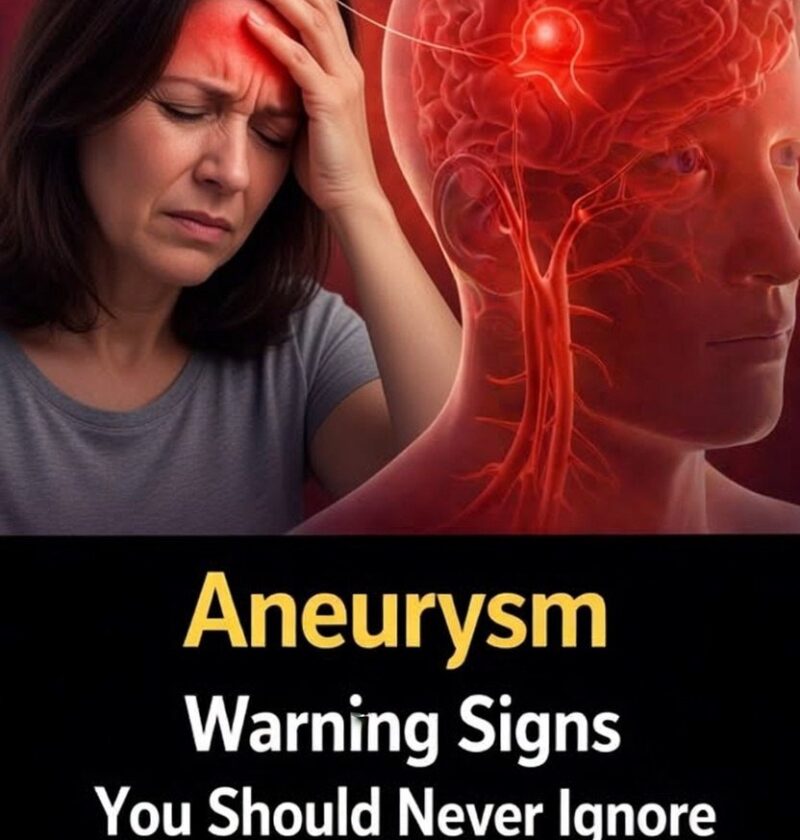
That headline is trying to create fear, but the underlying topic is real and important.An Aneurysm can sometimes be silent, and in certain cases it does produce warning symptoms before it becomes dangerous.
🚨 Possible symptoms that may be linked to an aneurysm (depending on location)
🧠 Brain (cerebral aneurysm)
May cause:
- Sudden, severe headache (“worst headache of life”)
- Blurred or double vision
- Pain above or behind the eye
- Drooping eyelid
- Stiff neck (in some cases)
👉 If rupture occurs:
- Sudden collapse
- Loss of consciousness
- Stroke-like symptoms
🫀 Aorta (major artery in chest/abdomen)
May cause:
- Deep, constant chest or back pain
- Pulsing sensation in abdomen
- Shortness of breath (if large)
- Hoarseness or difficulty swallowing (pressure effects)
⚠️ Important reality check
Most aneurysms:
- Have no symptoms at all
- Are found accidentally on scans
And most of these symptoms can also be caused by far more common conditions, such as:
- Muscle strain
- Migraines
- High blood pressure
- Sinus or eye problems
🚨 When to treat it as an emergency
Seek urgent help if there is:
- Sudden, severe headache unlike anything before
- Sudden chest/back pain with dizziness or fainting
- Neurological symptoms (weakness, speech problems)
❌ What viral posts exaggerate
- “Hidden aneurysm symptoms everyone ignores”
- “You definitely have this if you feel X”
- “Silent ticking time bomb signs in daily discomfort”
These are not medically reliable and often cause unnecessary panic.
🧠 Bottom line
Aneurysms are serious but usually silent. Only sudden, severe, unusual symptoms are true warning signs—routine aches or headaches are far more likely to have benign causes.
If you want, I can explain how doctors actually screen for aneurysms and who should get checked (based on real risk factors).