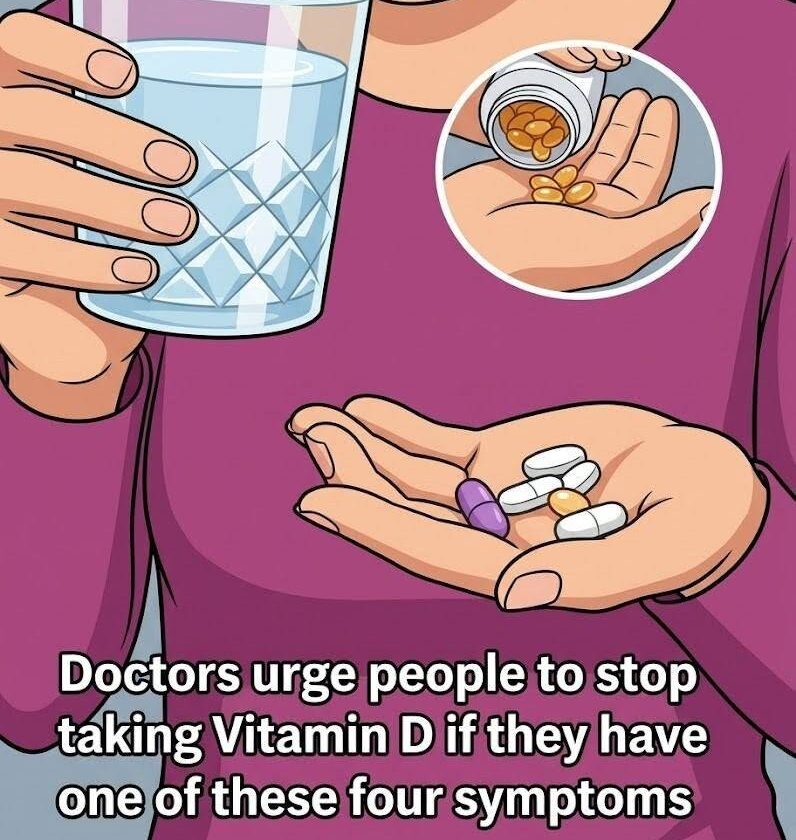
That headline is likely exaggerated. You should not stop taking vitamin D solely because of a viral post. However, there are situations where vitamin D can become harmful, particularly if someone is taking excessive doses and develops vitamin D toxicity.
Possible symptoms that can occur with excessive vitamin D intake include:
- Nausea and vomiting
- Excessive thirst and frequent urination
- Weakness or fatigue
- Confusion or changes in mental status
These symptoms are usually related to high calcium levels (hypercalcemia) caused by too much vitamin D, not by normal recommended doses.
Important context
- Vitamin D toxicity is uncommon.
- It is usually caused by taking very large supplemental doses for a prolonged period, not by sunlight or ordinary food intake.
- Many other conditions can cause the same symptoms, so they do not automatically mean vitamin D is the problem.
What to do if you’re taking vitamin D
- Follow the dose recommended by your healthcare professional or the product label.
- If you develop concerning symptoms and are taking high-dose vitamin D, contact a healthcare professional.
- Blood tests can measure vitamin D and calcium levels to determine whether vitamin D is contributing to the problem.
Don’t stop prescribed treatment without advice
If a healthcare professional has recommended vitamin D because of deficiency, osteoporosis risk, or another medical reason, it’s generally best to discuss any concerns with them before stopping it.
If you tell me:
- your vitamin D dose,
- how long you’ve been taking it,
- and which “4 symptoms” the article lists,
I can help assess whether the claim is medically reasonable.