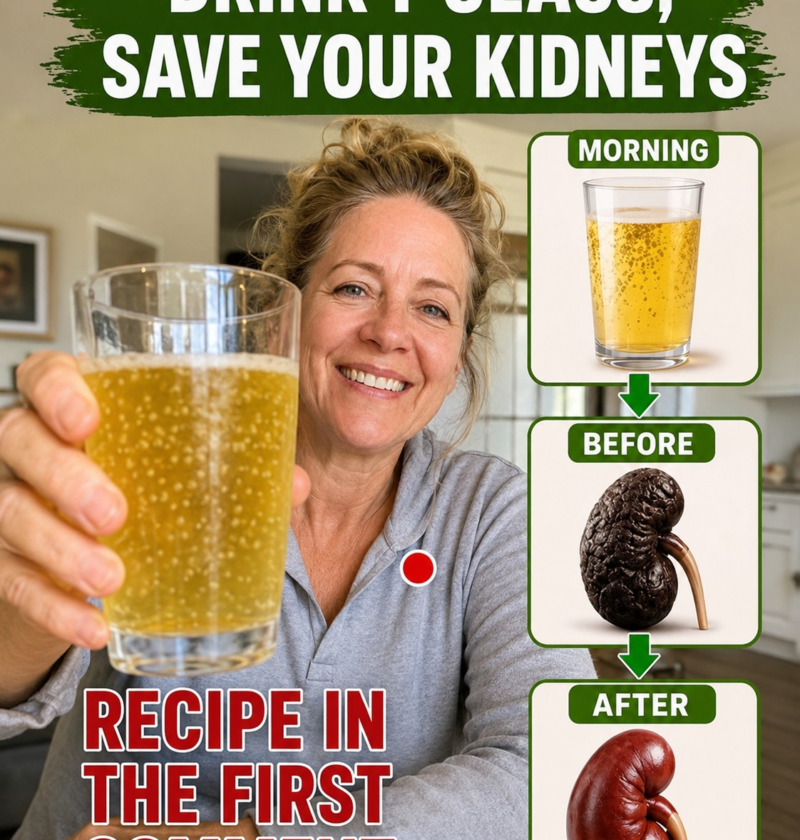
That claim is not medically accurate and is a common social media “miracle cure” hook.
What the statement is implying
“With just one cup a day, your kidneys will begin to heal…”
This type of post usually refers to a drink (tea, herbal mix, juice), but it:
- does not name a specific ingredient
- suggests kidney “regeneration” or healing
- uses emotional engagement bait (“say thank you to get recipes”)
That’s a strong red flag for clickbait wellness content, not medical guidance.
What science actually says about kidneys
Your kidneys:
- filter waste and excess fluid from the blood
- regulate blood pressure and electrolytes
- help produce important hormones
Important reality:
- Mild kidney stress can sometimes improve if the cause is fixed (hydration, blood pressure control, diabetes management)
- But damaged kidney tissue does NOT “heal” from a drink
Chronic kidney damage is usually:
- managed, not “reversed” by recipes
- treated with medical care, diet control, and sometimes medication or dialysis
Can drinks support kidney health?
Some beverages may support hydration and overall kidney function, such as:
- water (most important)
- unsweetened herbal teas (in moderation)
- cranberry juice (for urinary tract support, not kidney repair)
But they:
- do NOT repair kidney damage
- do NOT treat kidney disease on their own
- do NOT replace medical treatment
Why these posts are misleading
They often:
- promise “healing” in simple daily steps
- avoid naming ingredients clearly
- encourage engagement (“say thank you”, “check comments”)
- oversimplify serious conditions like kidney disease
Kidney health is influenced by:
- blood pressure
- blood sugar (diabetes)
- hydration
- medications
- genetics
Not a single drink.
When to actually worry about kidney health
See a doctor if you have:
- swelling in feet or face
- foamy urine
- frequent fatigue
- changes in urination
- high blood pressure
- diabetes
Early testing (blood and urine tests) is key.