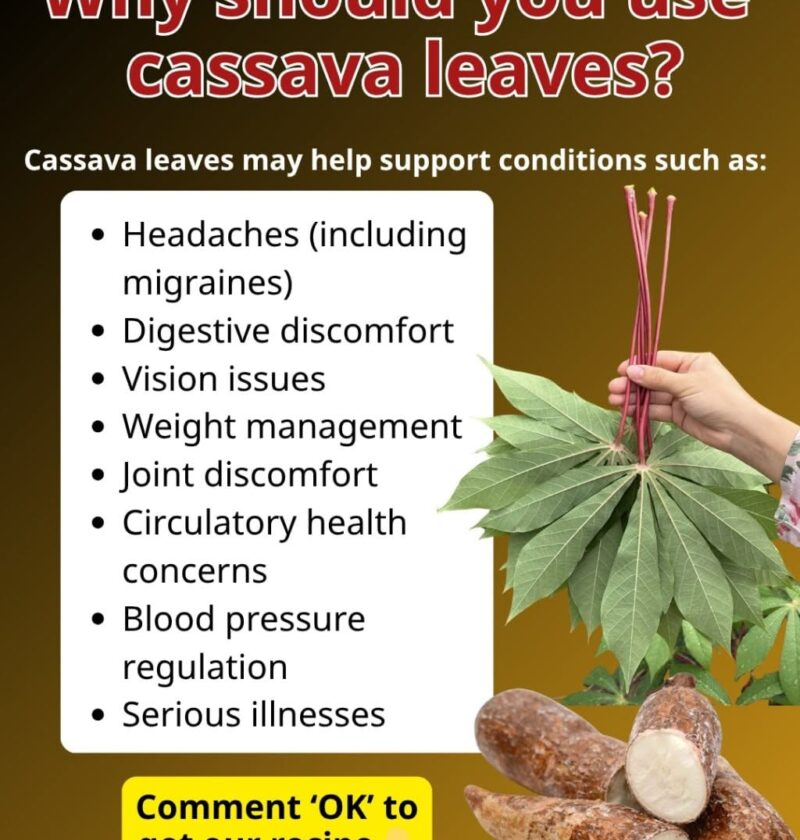
Cassava leaves are used as a food ingredient in many parts of the world, but they must be prepared properly before eating. Raw cassava leaves contain cyanogenic compounds that can release cyanide, which can be harmful if consumed in large amounts.
How cassava leaves are traditionally prepared
- Wash thoroughly to remove dirt and debris.
- Pound, chop, or crush the leaves (traditional methods often help reduce unwanted compounds).
- Boil thoroughly in plenty of water and discard the cooking water.
- Cook them again as part of a dish, often with ingredients such as coconut milk, vegetables, spices, or protein sources depending on the cuisine.
Possible nutritional benefits
When properly prepared, cassava leaves can provide:
- Fiber
- Protein (for a leafy vegetable)
- Minerals such as calcium and iron
- Plant compounds with antioxidant activity
Important safety notes
- Do not eat raw cassava leaves.
- Avoid using improperly processed cassava products.
- Extra care is needed for children, pregnant people, and anyone with health conditions.
- If you are unfamiliar with preparing cassava leaves, learn the traditional preparation method used in your region.
If you mean a specific recipe or health claim about cassava leaves, share it and I can help check whether it is accurate.