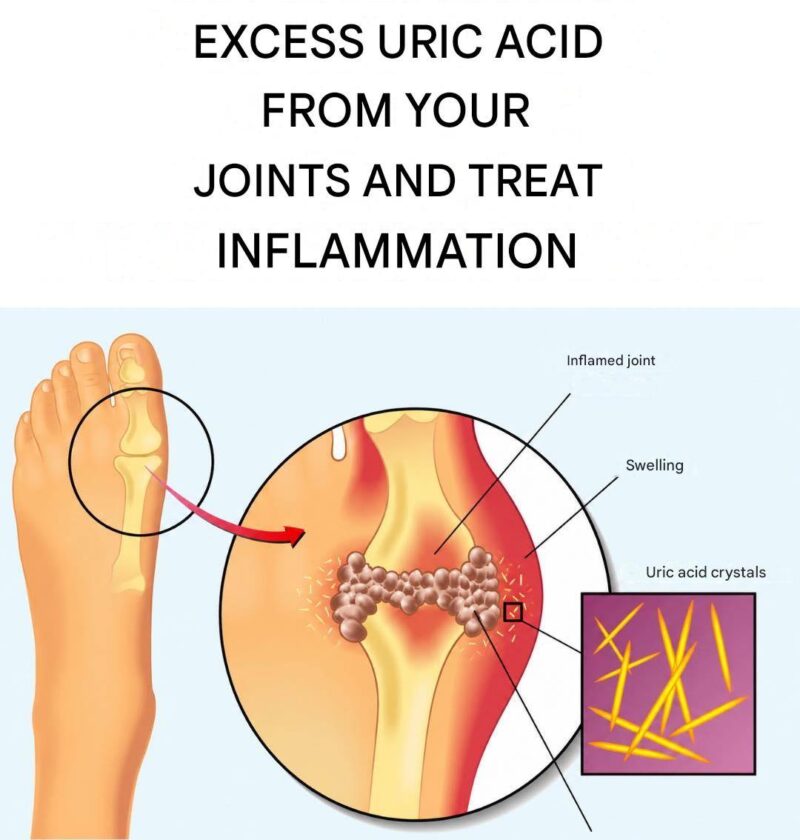
High uric acid in the blood can lead to joint inflammation (commonly called gout), where crystals form in joints and cause sudden pain, swelling, and redness—often in the big toe, ankles, or knees.
Here’s a practical, safe way to think about reducing uric acid and calming joint inflammation:
1) Reduce uric acid production (diet + habits)
Cut down strongly:
- Red meat (beef, mutton, organ meats like liver)
- Seafood (especially sardines, anchovies, shellfish)
- Sugary drinks (soda, packaged juices)
- Foods high in fructose (sweet desserts, processed snacks)
- Alcohol (especially beer)
Prefer more:
- Water (very important)
- Low-fat dairy (milk, yogurt)
- Eggs
- Vegetables (most are safe, even if some are moderately purine-rich)
- Whole grains (rice, oats, wheat)
- Coffee (may help lower uric acid in some people)
2) Increase uric acid removal
- Drink 2–3 liters of water daily (if no kidney/heart restriction)
- Maintain healthy body weight (rapid weight loss can worsen uric acid temporarily)
- Light daily activity like walking helps metabolism
3) During joint inflammation (acute attack)
For painful swollen joints (typical in Gout):
- Rest the affected joint
- Apply ice packs 10–15 minutes a few times a day
- Keep the joint elevated
- Avoid heavy exercise during flare-ups
Doctors commonly use medications such as:
- Anti-inflammatory drugs (NSAIDs like ibuprofen or naproxen)
- Colchicine (especially early in attacks)
- Corticosteroids (if severe or NSAIDs not suitable)
4) Long-term control (very important)
If uric acid stays high or attacks repeat:
- Medicines that lower uric acid (like allopurinol or febuxostat) may be prescribed by a doctor
- Regular blood tests to monitor uric acid levels
5) When to see a doctor urgently
- Severe joint pain that doesn’t improve in 1–2 days
- Fever with joint swelling
- Repeated attacks
- Kidney pain or history of kidney stones
- Difficulty walking due to pain
Important note
Trying to “flush out uric acid quickly” with extreme diets or herbal remedies usually doesn’t work and can sometimes make things worse. Long-term control is about steady lifestyle changes + proper medication if needed.
If you want, tell me:
- Your symptoms (which joint, how long, swelling or not)
- Your diet habits
I can help you figure out whether it sounds like gout or another type of joint inflammation and what steps fit your situation better.