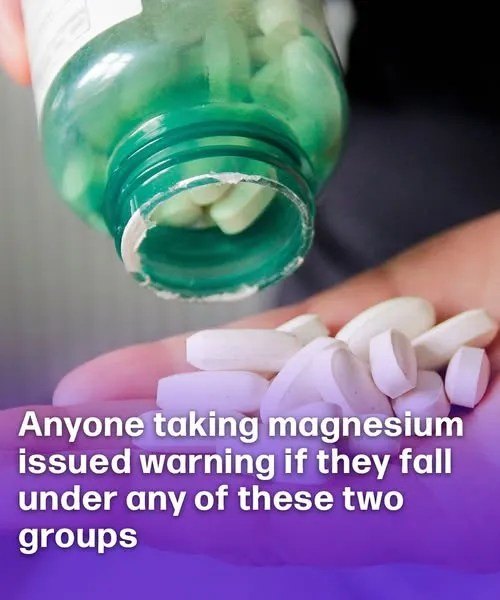
A viral health advisory circulating in recent reports warns about magnesium supplements, saying they may be unsafe for certain people—even though magnesium is an essential mineral.
Here’s what the warning is actually about, and who the two main high-risk groups are.
What the warning says (in simple terms)
Magnesium supplements are generally safe at normal doses, but problems can happen when:
- doses are too high, or
- the body can’t remove excess magnesium properly
Too much magnesium can build up in the blood (called hypermagnesemia) and may lead to:
- low blood pressure
- irregular heartbeat
- muscle weakness
- confusion or drowsiness
- in severe cases, breathing problems or cardiac arrest (Verywell Health)
The 2 high-risk groups highlighted
1) People with kidney disease
This is the main group repeatedly flagged in medical guidance.
- The kidneys normally remove excess magnesium from the body
- In chronic kidney disease, this removal process is weakened
- So magnesium from supplements (and even some antacids/laxatives) can build up to dangerous levels (ScienceInsights)
👉 This is why doctors often caution or closely monitor magnesium use in:
- chronic kidney disease
- kidney failure or dialysis patients
2) Older adults (especially with reduced kidney function)
Older adults are often included as a second high-risk group because:
- kidney function naturally declines with age
- they are more likely to take multiple medications, including magnesium-containing antacids or laxatives
- they may not realize their kidneys aren’t clearing minerals efficiently (Bolt Pharmacy)
👉 So even “normal” supplement doses can sometimes accumulate more easily in older people.
Important context (what’s sometimes missed online)
- Toxicity from food is very rare—dietary magnesium is generally safe
- Risk mainly comes from supplements or medicinal magnesium (laxatives/antacids)
- Healthy kidneys usually eliminate excess magnesium effectively (Office of Dietary Supplements)
Bottom line
The warning isn’t that magnesium is dangerous for most people—it’s that:
People with reduced kidney function (especially kidney disease patients and many older adults) are the two main groups at real risk from magnesium supplements.
If you want, I can also break down:
- safe daily magnesium doses
- symptoms of overdose vs deficiency
- or which magnesium types are safest (glycinate, citrate, oxide, etc.)