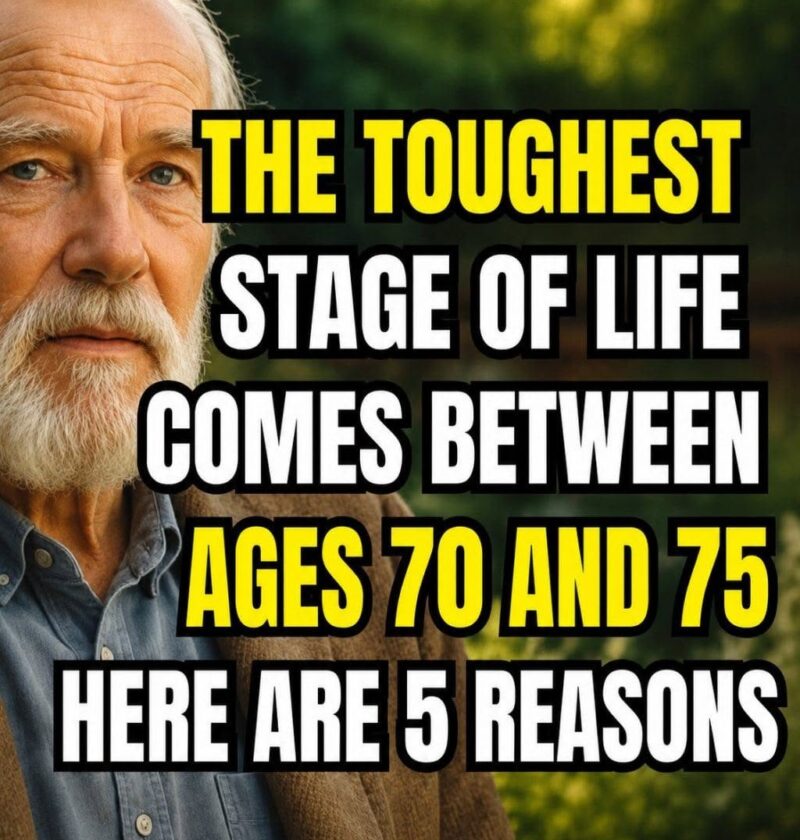
That kind of statement is not a medical or scientific rule—it’s a sweeping generalization designed to sound emotional and universal, but people age very differently.
There is no proven “hardest age” between 70 and 75. For some people it’s challenging, for others it’s stable or even fulfilling.
That said, there are common challenges that can increase around that age range for some individuals:
🧓 Why some people find their 70s more difficult
1. Health conditions become more noticeable
Chronic issues may accumulate, such as:
- Arthritis (Osteoarthritis)
- Heart disease
- Diabetes
- Mobility limitations
These don’t suddenly start at 70–75, but their impact may become more obvious.
2. Reduced physical strength and stamina
Natural age-related muscle loss (sarcopenia) can lead to:
- Slower walking
- Fatigue
- Higher fall risk
3. Loss of independence in some cases
Some people may need help with:
- Driving
- Shopping
- Medication management
- Daily activities
This depends heavily on health, not just age.
4. Emotional and social changes
Possible factors include:
- Retirement adjustment
- Loss of friends or spouse
- Social isolation in some cases
5. Cognitive changes (not always present)
Some individuals may experience mild memory decline, though normal aging is different from dementia such as Alzheimer’s disease.
🧠 Important reality check
- Many people in their 70s remain active, independent, and healthy.
- Quality of life depends more on lifestyle, genetics, healthcare, and social support than a specific age range.
- Studies show well-being can even improve for some people after retirement due to reduced stress.