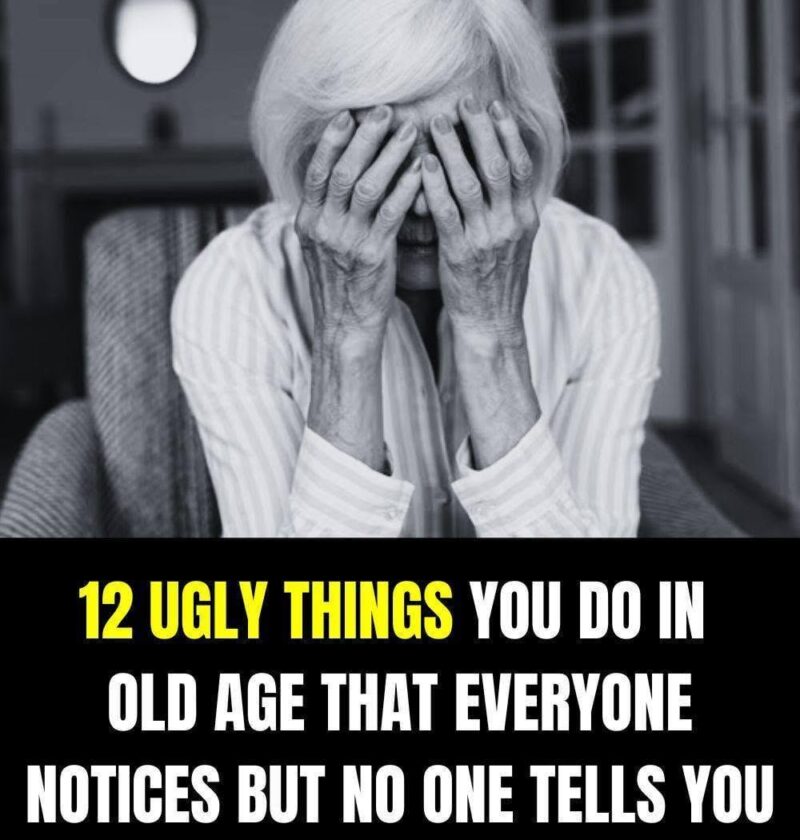
That’s another vague clickbait teaser. “Unpleasant habits in old age…” sounds like it’s about hidden truths, but without specifics it doesn’t actually say anything meaningful.
Still, if we interpret it in a realistic and respectful way, it usually refers to common behaviors that can become more noticeable or socially uncomfortable in older age, often due to health, mobility, or cognitive changes—not “bad habits” in a moral sense.
Common issues that may cause discomfort in social settings (especially in older adults)
1. Repeating the same stories or questions
This can happen due to:
- Normal aging memory changes
- Hearing difficulties
- Early cognitive decline
It’s usually not intentional.
2. Loud speaking or difficulty hearing
Hearing loss is very common with age.
This can lead to:
- Speaking too loudly
- Misunderstanding conversations
- Social frustration for both sides
3. Slower movement or delays
Natural physical aging can cause:
- Reduced walking speed
- Difficulty keeping up in groups
- Needing more time for tasks
This is often mistaken for “inconvenience,” but it’s a normal part of aging.
4. Strong opinions or irritability
Some older adults may become:
- More easily frustrated
- Less patient in crowded or noisy environments
This can be influenced by stress, health issues, or life experiences.
5. Forgetfulness in daily interactions
Mild memory issues may include:
- Misplacing items
- Forgetting recent conversations
- Missing appointments
This can become more noticeable in social settings.
6. Less awareness of social cues (in some cases)
In certain conditions, including early dementia, people may:
- Interrupt conversations
- Repeat themselves
- Miss subtle social signals
Important reality check
These are not “bad habits” in the usual sense. They are often:
- Age-related changes
- Medical or sensory issues
- Effects of fatigue or health conditions
The key takeaway
The phrase is designed to sound judgmental, but most behaviors linked to aging are health-related, not intentional habits. Understanding this helps reduce stigma and improves communication with older adults.
If you want, I can also explain how to communicate more comfortably with elderly parents or grandparents without frustration on either side.