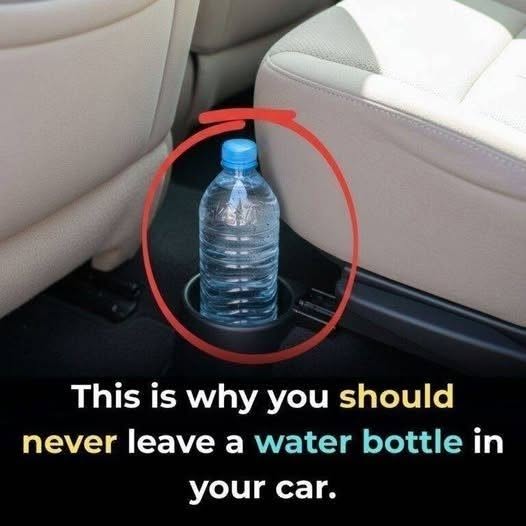
Yes—leaving a sealed water bottle in your car is usually safe for occasional use, but there are a few things worth knowing.
What actually happens in a hot car?
1. The water gets very hot
A parked car can become much hotter than the outside air, especially in direct sunlight. The water may become unpleasantly warm to drink, but heat alone does not automatically make it unsafe.
2. Plastic can release small amounts of chemicals
Plastic bottles can release tiny amounts of chemicals into the water over time, and heat may increase this process. For typical bottled water containers, the amounts detected are generally considered low, but researchers continue to study long-term exposure. Repeatedly heating and reusing disposable bottles is generally less desirable than using a reusable bottle designed for long-term use.
3. Bacteria are usually not the main concern in a sealed bottle
If the bottle is unopened and sealed, bacteria do not suddenly appear because it got hot. The bigger issue is when someone drinks from the bottle and then leaves it in a warm car, allowing bacteria from the mouth to multiply over time.
4. The bottle may degrade
Heat can weaken disposable plastic bottles, causing them to warp, leak, or develop off-flavors.
What about fire risk?
There have been a few documented cases where a clear water bottle acted like a lens and focused sunlight onto a surface, creating enough heat to scorch material. It’s uncommon, but keeping bottles out of direct sunlight is sensible.
Practical advice
- Avoid storing bottled water in a hot car for extended periods if possible.
- Don’t repeatedly refill and reuse thin disposable water bottles.
- If you’ve already drunk from the bottle, don’t leave it sitting in a hot car for days and then continue drinking from it.
- Consider a reusable stainless-steel or insulated bottle for regular use.
Bottom line
An unopened bottle of water left in a car for a short period is unlikely to become dangerous, but prolonged heat exposure can affect taste, the plastic container, and potentially increase chemical leaching. For routine use, it’s better to avoid storing drinking water in a hot vehicle for long periods.