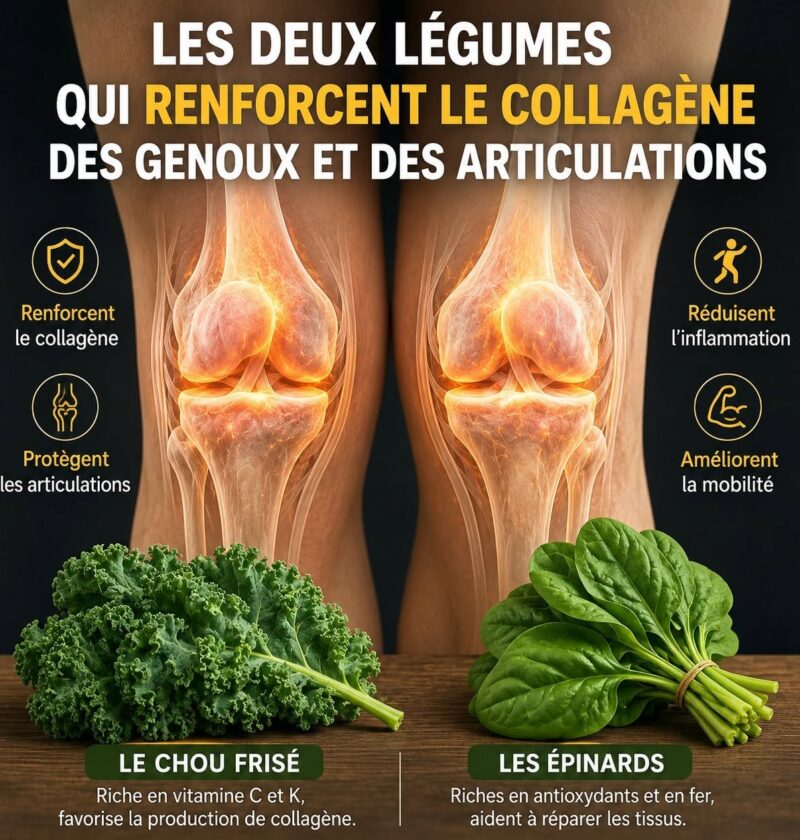
That kind of headline is marketing-style exaggeration, not a medically proven fact.
There are no two vegetables that directly “boost collagen in your knees and joints” in a targeted, dramatic way. Collagen production is a complex process influenced by overall diet, protein intake, vitamin C, and general health—not a couple of “superfoods.”
What is actually true
Your body makes Collagen using nutrients like:
- Vitamin C
- Protein (amino acids like glycine and proline)
- Zinc and copper
So foods can support collagen production indirectly—but they don’t “inject” collagen into knees.
Vegetables that support joint and collagen health
If we strip away hype, the most helpful vegetables are those rich in antioxidants and vitamin C:
1. Leafy greens (e.g., spinach, kale)
- Rich in antioxidants
- Help reduce inflammation in joints
- Support overall connective tissue health
2. Cruciferous vegetables (e.g., broccoli, cabbage, cauliflower)
- Contain vitamin C and compounds that support tissue repair
- Help protect cartilage from oxidative stress
Other foods that matter more than vegetables
For joint health, these are actually more important:
- Protein sources (eggs, fish, legumes)
- Vitamin C foods (citrus fruits, peppers)
- Omega-3 fats (fish, walnuts)
- Adequate hydration
What about knee and joint “repair”?
Joint issues like arthritis involve conditions such as Osteoarthritis. Diet can:
- Reduce inflammation
- Support overall joint function
- Slow progression in some cases
But it cannot regrow cartilage or “rebuild knees” overnight as some posts imply.
Bottom line