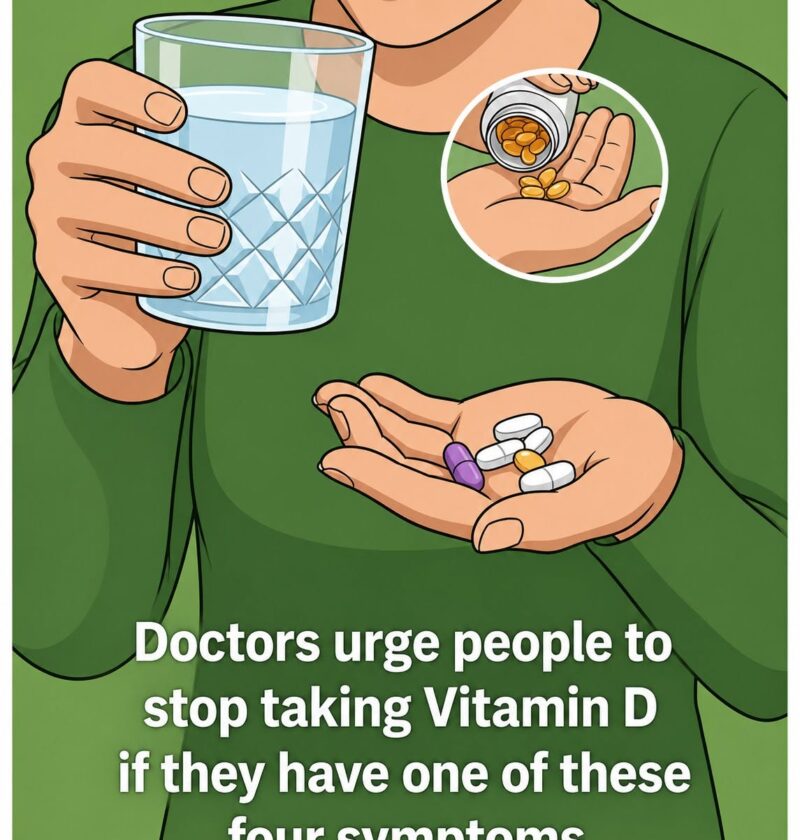
That headline is clickbait-y and misleading. Doctors do not generally tell people to “stop vitamin D immediately” based on a simple list of vague symptoms. Vitamin D is an essential supplement for many people, but like anything, too much can cause toxicity.
When vitamin D actually becomes a problem
Excess intake of Vitamin D can lead to vitamin D toxicity, which usually causes high calcium levels in the blood (hypercalcemia).
That’s what produces symptoms—not vitamin D itself at normal doses.
Real symptoms of too much vitamin D (toxicity)
If someone truly has vitamin D overdose, symptoms may include:
- Persistent nausea or vomiting
- Loss of appetite
- Constipation or abdominal pain
- Excessive thirst and frequent urination
- Weakness, fatigue, or confusion
- Kidney-related pain or kidney stones (in severe cases)
These happen because high vitamin D → high calcium → affects kidneys, nerves, and digestion.
Important reality check
- Toxicity is rare and usually comes from very high doses over time, not normal supplements.
- Most people taking standard doses (like 1,000–2,000 IU/day) are not at risk unless medically mismanaged.
- Sun exposure alone almost never causes toxicity.
What you should actually do
Instead of stopping vitamin D based on random symptoms:
- If you suspect a problem, get a blood test (25-OH vitamin D + calcium level)
- Only adjust dose with a doctor’s guidance
- Be cautious if you are taking high-dose prescriptions (like 50,000 IU weekly)
Bottom line
There is no legitimate medical rule that says “stop vitamin D immediately if you have these 4 symptoms” without context. That kind of advice is usually exaggerated for clicks.
If you want, tell me the 4 symptoms mentioned in that article—I can break down whether each one is actually related to vitamin D or something else.