What Does the Color of Your Urine Say About Your Health? 🚽💧
Urine color can give clues about hydration levels and certain health conditions, but it is not a complete diagnosis. Many factors—such as foods, vitamins, medicines, and supplements—can change urine color.
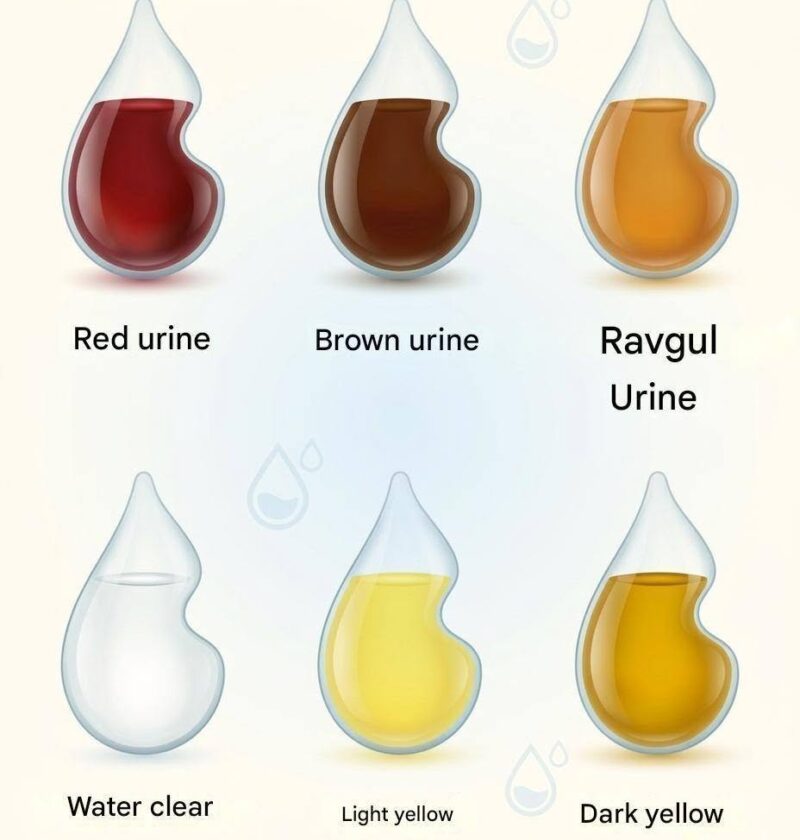
🟡 Pale Yellow (Usually Normal)
✅ Often indicates good hydration and normal kidney function.
🟨 Dark Yellow / Amber
💧 May suggest you are not drinking enough fluids.
Try: Drinking water and checking whether the color becomes lighter.
🟤 Brown or Tea-Colored
⚠️ Can be caused by:
- Severe dehydration
- Certain medicines
- Liver or muscle-related problems (in some cases)
Seek medical advice if it persists or comes with other symptoms.
🟠 Orange Urine
Possible causes include:
- Dehydration
- Certain medications
- Some vitamin supplements
- Liver or bile-related issues (less commonly)
🔴 Pink or Red Urine
Possible causes:
- Beets, berries, or certain foods
- Some medications
- Blood in the urine (which should be checked, especially if unexplained)
🟢 Green or Blue Urine
Rare, but can occur due to:
- Food dyes
- Certain medications
- Some medical conditions or infections
⚪ Cloudy or Milky Urine
May be linked to:
- Dehydration
- Urinary tract infection (UTI)
- Crystals or other substances in urine
🫧 Very Foamy Urine
Occasional bubbles are common, but persistent foam may need evaluation, especially if there are other symptoms.
When to Contact a Healthcare Professional 🚨
Seek advice if you notice:
- Blood in urine without an obvious cause
- Persistent dark brown urine
- Pain or burning when urinating
- Fever, back/flank pain, or strong unusual odor
- A major change in urine color that does not go away
🌿 Simple tip: The most common reason for darker urine is dehydration. Drinking enough fluids and paying attention to changes over time can help you understand your body better.