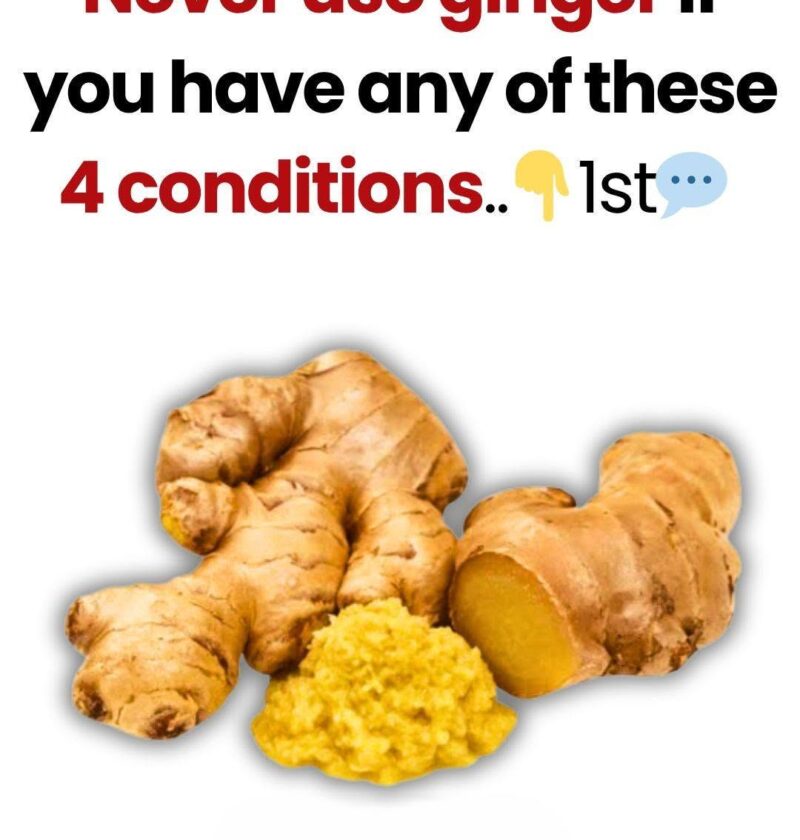
That kind of headline is again sensationalized. Ginger is generally safe for most people when eaten in normal food amounts, and even in moderate supplement doses. But like any biologically active substance, it can cause problems in certain situations.
Here’s the real, medically grounded version:
🌿 Ginger (Ginger) — when you should be cautious
1) If you’re on blood-thinning medication
Ginger may mildly reduce platelet aggregation.
- Risk matters mainly with drugs like warfarin, aspirin, or clopidogrel
- Normal food use is usually fine, but high-dose supplements can be an issue
2) If you have bleeding disorders
People with conditions that already affect clotting should avoid large medicinal doses of ginger because it may slightly increase bleeding tendency.
3) If you’re scheduled for surgery
Doctors often recommend stopping high-dose ginger 1–2 weeks before surgery
- Reason: theoretical bleeding risk
4) If you have gallstones (in some cases)
Ginger may stimulate bile flow
- This could worsen symptoms in certain gallbladder conditions
5) If you have very low blood pressure
Ginger may slightly lower blood pressure in some people
- Usually mild, but can matter if combined with medication
6) If you have severe acid reflux
In some people, ginger can:
- Increase heartburn
- Irritate the stomach lining when taken in high amounts
🧠 Key reality check
- Normal culinary use (tea, cooking) is safe for most people
- Problems are mainly linked to high-dose supplements, not food
- “Never use ginger” is not medically accurate
🚨 Bottom line
Ginger is:
- ✔️ Safe for most people in food amounts
- ⚠️ Caution only in specific medical situations or high doses
- ❌ Not something most people need to avoid
If you want, I can list foods that truly interact with medications (like blood thinners or blood pressure drugs)—that’s where the real clinically important warnings are.