🍉 You Cut Open a Watermelon and Saw Cracks? Here’s What It Could Mean (And When to Stop Eating It)
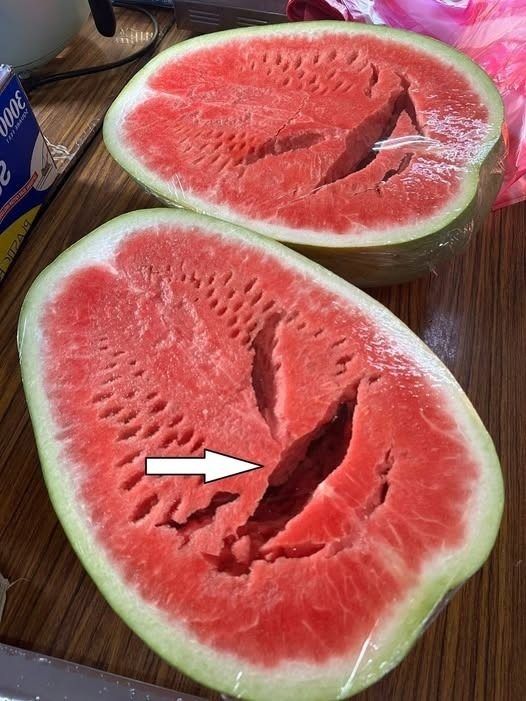
Seeing unusual cracks or hollow-looking patterns inside a watermelon can be surprising—and sometimes concerning. But not all “cracked” watermelons are unsafe. The key is understanding what type of cracking you’re seeing and whether there are signs of spoilage.
🧠 Why Watermelons Develop Cracks Inside
Watermelon flesh can develop irregular patterns due to growth conditions, storage, or internal structure changes. Most cases are not dangerous, but some can indicate poor quality or spoilage.
🍉 1. Growth Stress (Most Common Cause)
Sometimes watermelons grow too fast due to:
- Irregular watering
- High fertilizer use
- Rapid temperature changes
This can cause internal “fissures” or cracks in the flesh.
What it looks like:
- Thin white lines or cracks
- Flesh still firm and red
- Normal smell and taste
👉 Usually safe to eat if everything else looks normal.
🧊 2. Overripeness and Internal Breakdown
As watermelon becomes overripe, the structure starts breaking down.
Signs include:
- Soft or mushy texture
- Grainy or separated flesh
- Slightly fermented smell
This happens as sugars break down and cells weaken.
🦠 3. Fermentation or Early Spoilage (⚠️ Warning Sign)
If cracks are accompanied by spoilage, it may be unsafe.
Watch for:
- Sour or alcoholic smell
- Slimy texture
- Bubbling or wet pockets
- Off or bitter taste
This can indicate bacterial or yeast activity.
🌡️ 4. Temperature Damage (Cold or Heat Stress)
Improper storage can damage watermelon texture:
- Freezing causes cell rupture
- Excess heat speeds internal breakdown
This may create uneven or cracked-looking flesh.
⚠️ When You SHOULD Stop Eating It Immediately
Discard the watermelon if you notice:
❌ Strong sour or fermented odor
❌ Slimy or sticky texture
❌ Mold anywhere inside
❌ Bitter or unpleasant taste
❌ Gas-like bubbles or wet cavities
These are signs it may no longer be safe.
🧪 Is It Always Dangerous?
No. Many watermelons with internal cracks are still safe if:
- Smell is fresh and sweet
- Texture is firm
- No mold or slime is present
- Taste is normal
Most cases are simply growth-related imperfections, not spoilage.
🧠 How to Avoid Bad Watermelons in the Future
🍉 Choose a good one:
- Heavy for its size
- Uniform shape
- Deep green rind
- Yellow field spot (ripeness indicator)
🧊 Store properly:
- Keep whole watermelon at room temperature (short term)
- Refrigerate after cutting
- Consume within 3–4 days after cutting
📌 Final Takeaway
Seeing cracks inside a watermelon is not always a reason to panic. In most cases, it is caused by natural growth stress or ripening changes. However, if cracks are combined with bad smell, slimy texture, or unusual taste, it’s safer to discard it immediately.
When in doubt—trust your senses: smell, look, and taste carefully before eating.