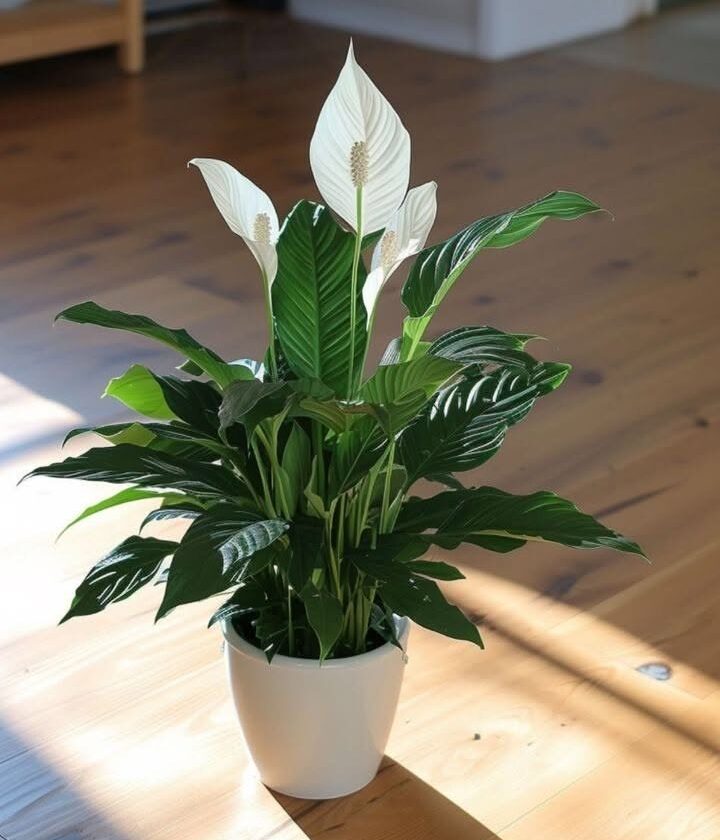
A peace lily (Peace lily (Spathiphyllum)) can be a little picky about blooming. It often survives easily but refuses to flower unless its conditions are just right. Here are 11 practical ways to get it to bloom again:
1. Give it bright, indirect light
This is the biggest factor. Peace lilies grow in low light but only bloom in bright, filtered light—near a window but not in direct sun.
2. Avoid deep shade
If it’s sitting in a dark corner, it will produce leaves but very few (or no) flowers.
3. Keep a consistent watering routine
Water when the top inch of soil feels dry. Overwatering or letting it dry out too much can both prevent blooming.
4. Use well-draining soil
Heavy, compact soil holds too much water and stresses the roots, reducing flowering.
5. Feed it during growing season
Use a balanced houseplant fertilizer (or slightly higher phosphorus) every 4–6 weeks in spring and summer.
6. Don’t over-fertilize
Too much nitrogen makes lush green leaves but no flowers.
7. Maintain warm temperatures
Ideal range is about 18–27°C. Cold drafts or sudden temperature drops can stop blooming.
8. Increase humidity
Peace lilies love humidity. Dry air (especially from fans or AC) can reduce flowering.
9. Repot when root-bound
If roots are tightly packed, the plant may stop blooming. Repot every 1–2 years if needed.
10. Trim old flowers and yellow leaves
Removing spent blooms encourages the plant to redirect energy into new growth.
11. Be patient with mature growth cycles
Young plants often don’t bloom. Mature, well-established plants are far more likely to flower regularly.
In short, blooming usually comes down to light + maturity + balanced feeding. If your peace lily has plenty of leaves but no flowers, it’s almost always a light or fertilizer balance issue.
If you want, tell me how yours looks (light, pot size, watering), and I can pinpoint exactly why it’s not blooming.