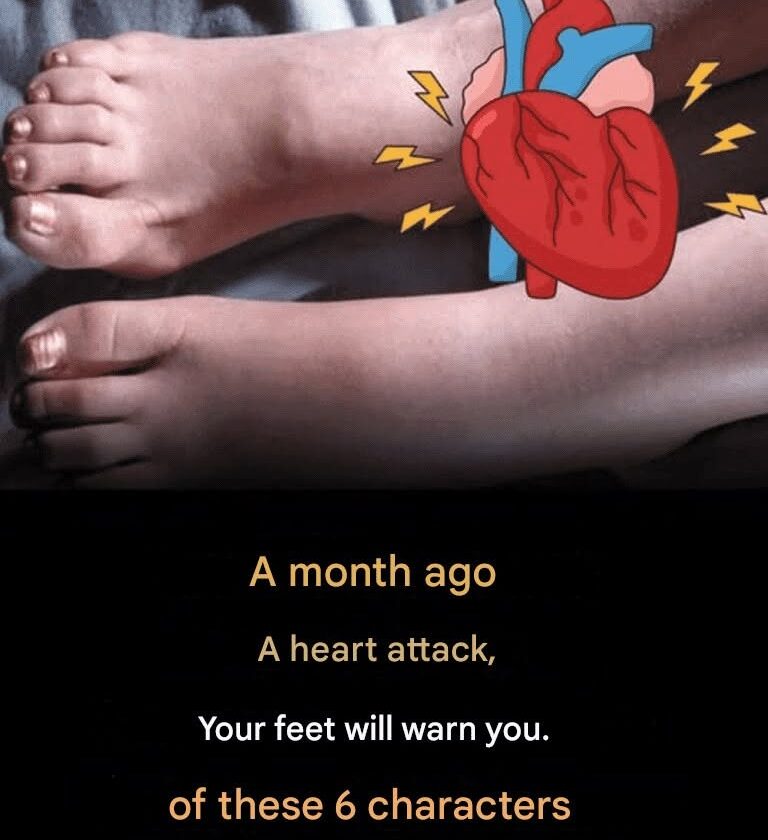
There is no reliable evidence that your feet can consistently warn you a month before a heart attack. Claims like “your feet warn you of six signs a month in advance” are common in sensational articles but are not supported by strong medical research.
That said, some foot and leg symptoms can be associated with heart or blood vessel problems. They should be evaluated by a healthcare professional, especially if they’re new or worsening.
Here are six symptoms that may be relevant:
- Swelling of the feet or ankles
- Persistent swelling can be a sign of fluid retention from conditions such as Heart failure, kidney disease, liver disease, or certain medications (including Amlodipine).
- Cold feet
- Feet that are consistently cold may indicate reduced blood flow due to Peripheral artery disease, though there are many other possible causes.
- Pain in the legs or feet when walking
- Cramping that improves with rest (called claudication) can be a sign of peripheral artery disease, which increases the risk of heart attack and stroke.
- Slow-healing sores or ulcers
- Wounds that don’t heal can result from poor circulation or diabetes and may signal underlying vascular disease.
- Blue or pale toes
- Changes in skin color can indicate reduced circulation and should be assessed promptly.
- Numbness or tingling
- These symptoms are more commonly caused by nerve problems or diabetes than by heart disease, but poor circulation can sometimes contribute.
What symptoms are more likely to occur before a heart attack?
Many people experience warning symptoms days to weeks before a heart attack, although some have none. More typical warning signs include:
- Chest pressure, tightness, or pain.
- Pain spreading to the arm, shoulder, neck, jaw, or back.
- Shortness of breath.
- Unusual fatigue.
- Nausea or indigestion.
- Cold sweats.
- Lightheadedness.
When to seek emergency care
If you or someone else has chest pain or pressure lasting more than a few minutes, especially if it’s accompanied by shortness of breath, sweating, nausea, or pain radiating to the arm or jaw, call your local emergency services immediately. Early treatment can significantly reduce heart damage.
Foot symptoms alone are not a dependable way to predict that a heart attack will occur in the next month, but they can be important signs of circulatory or cardiovascular disease that deserve medical evaluation.