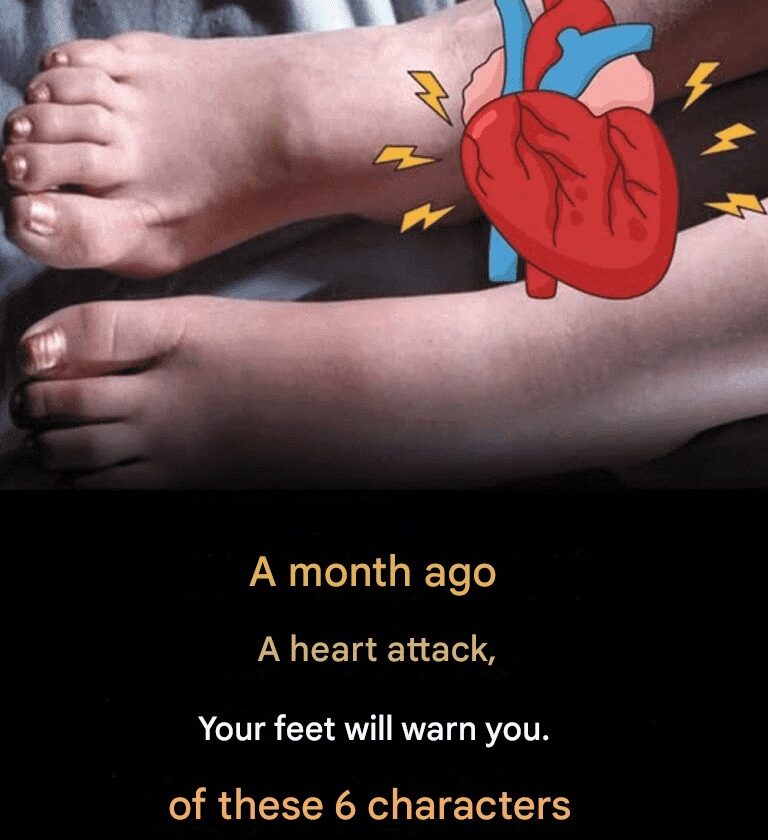
The claim that “your feet warn you a month before a heart attack” is an oversimplification. Heart attacks usually don’t come with a reliable 30-day countdown, and foot symptoms alone can’t predict them.
However, some circulation and nerve-related changes in the feet and legs can be linked to underlying heart or blood vessel disease. If they appear, they’re a reason to get checked—not a guaranteed warning of an imminent heart attack.
Here are six foot/leg signs that may signal higher cardiovascular risk:
1. Cold feet that don’t warm up easily
Poor circulation from narrowed arteries can reduce blood flow to the feet.
2. Pain in feet or calves when walking (claudication)
This can happen with peripheral artery disease (PAD), which is strongly linked to heart disease.
3. Swelling in ankles or feet
May indicate fluid buildup from heart-related pumping problems or other conditions.
4. Slow-healing wounds or sores on toes/feet
Reduced blood flow makes healing difficult and increases infection risk.
5. Numbness, tingling, or burning sensations
Often related to nerve damage from diabetes, which significantly raises heart attack risk.
6. Pale, bluish, or shiny skin on feet
Can suggest poor oxygen delivery due to reduced circulation.
Important reality check
- These symptoms are not specific to heart attacks. They can come from diabetes, nerve disorders, infections, or simple circulation issues.
- Many people with heart attacks have no obvious foot symptoms beforehand.
- A heart attack is more strongly signaled by symptoms like chest pressure, shortness of breath, nausea, or pain radiating to arm/jaw.
When to take it seriously
If foot symptoms appear along with chest discomfort, breathlessness, sweating, or dizziness, that’s urgent—seek emergency care immediately.
If you want, I can break down the real early warning signs of a heart attack (hour-to-days before) or explain how peripheral artery disease connects to heart disease.