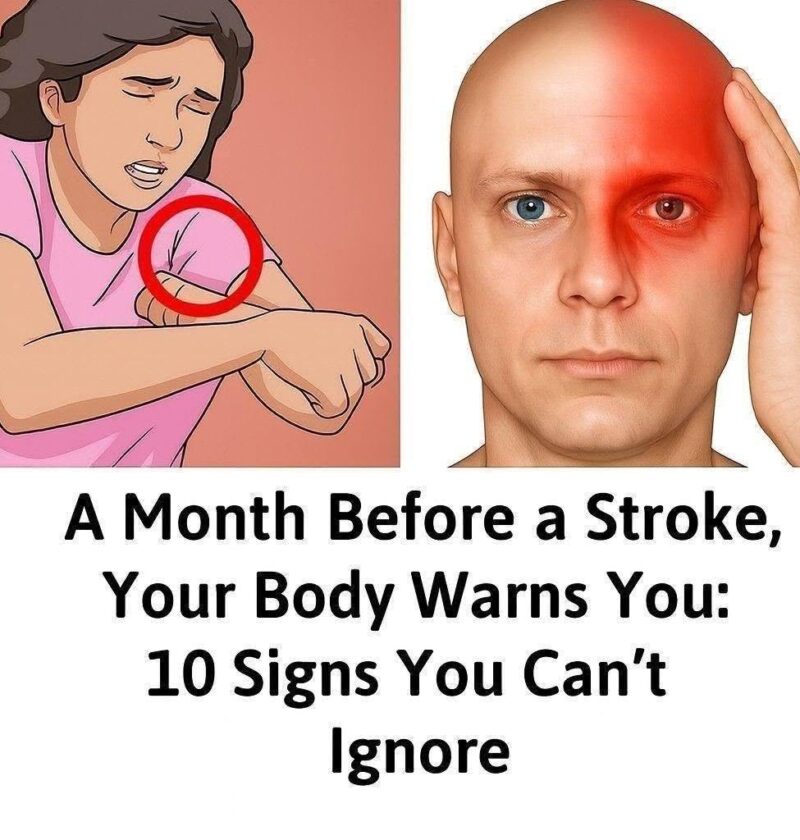
The idea that a stroke reliably gives “10 warning signs a month before” is a bit misleading. Some people do experience early symptoms, but they are usually intermittent and unpredictable, often related to small temporary blockages called a mini-stroke.
A more accurate way to think about it is: the body may give warning episodes (especially in the days or weeks before) rather than a clear month-long checklist.
Here are the real warning signs that can appear before a major stroke, most often as brief or recurring episodes:
Key warning signs (often linked to mini-strokes)
- Sudden weakness or numbness
- Face, arm, or leg (especially one side)
- Brief speech problems
- Slurred speech or trouble finding words
- Temporary vision loss or blur
- One eye or both, comes and goes
- Short episodes of dizziness or imbalance
- Feeling unsteady or suddenly uncoordinated
- Sudden confusion or “brain fog”
- Difficulty understanding simple things
- Brief paralysis or heaviness in a limb
- Then it resolves completely
- Sudden severe headache (unusual for you)
- Especially if it comes with other symptoms
- Episodes of tingling or pins-and-needles
- Especially on one side of the body
- Sudden difficulty swallowing
- Comes and goes
- Short-lived loss of coordination or falls
- Without obvious reason
The most important warning: TIA
These symptoms often come from a Transient Ischemic Attack, which is basically a “mini-stroke.”
A TIA can last minutes to hours and then disappear completely—but it is a strong warning that a full Stroke may follow, sometimes within days.
Important reality check
- Not everyone gets warning signs
- When they do happen, they’re usually sudden and temporary, not a steady 1-month progression
- The biggest danger is ignoring symptoms because they “went away”
When to act immediately
Use FAST:
- Face drooping
- Arm weakness
- Speech difficulty
- Time to call emergency help
If you want, I can also explain early risk factors (like blood pressure changes or heart rhythm issues) that can show up quietly before any symptoms appear.