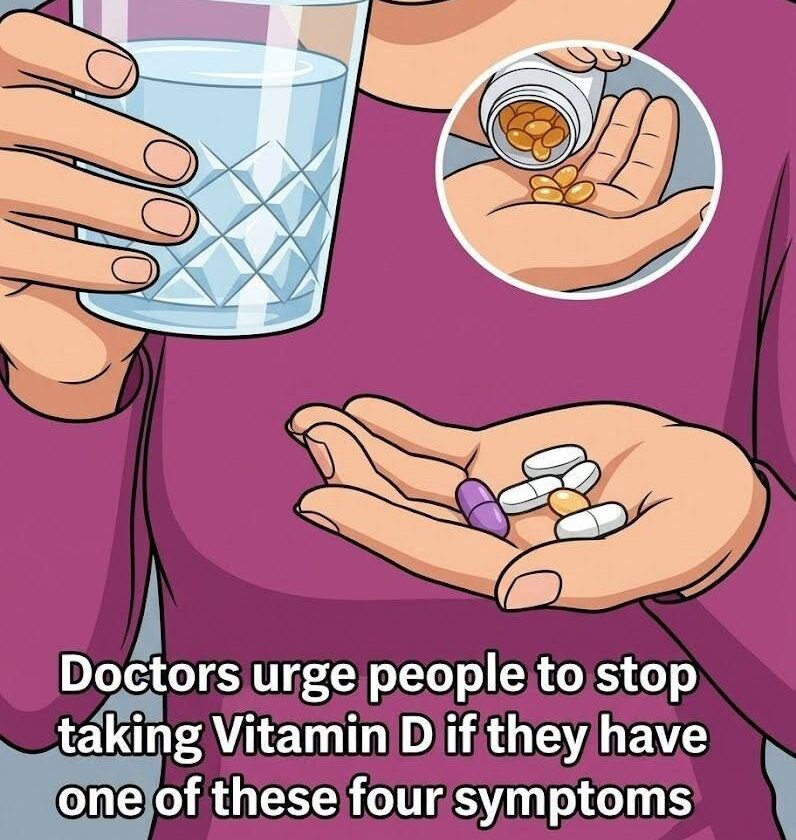
That headline is alarmist clickbait. Doctors do not generally tell people to “stop vitamin D immediately” based on vague symptom lists without context or blood tests.
Vitamin D is important for bone health, immune function, and calcium regulation—but like anything, too much can cause problems.
Real issue: vitamin D toxicity (rare but possible)
Problems usually happen from very high supplement doses over time, not normal food or sun exposure.
Possible symptoms of excess vitamin D (hypervitaminosis D) include:
- Nausea or vomiting
- Weakness or fatigue
- Excessive thirst and frequent urination
- Confusion
- Kidney-related problems (from high calcium levels)
Important reality check
- You don’t stop vitamin D just because of general symptoms online
- These symptoms are non-specific and can be caused by many conditions
- Diagnosis requires a blood test (25-hydroxy vitamin D and calcium levels)
What doctors actually recommend
- Take vitamin D only if needed (deficiency is common in some regions)
- Follow safe daily doses (usually 600–2000 IU for many adults, depending on advice)
- Avoid very high doses unless prescribed
- Get tested if you suspect imbalance
Bottom line