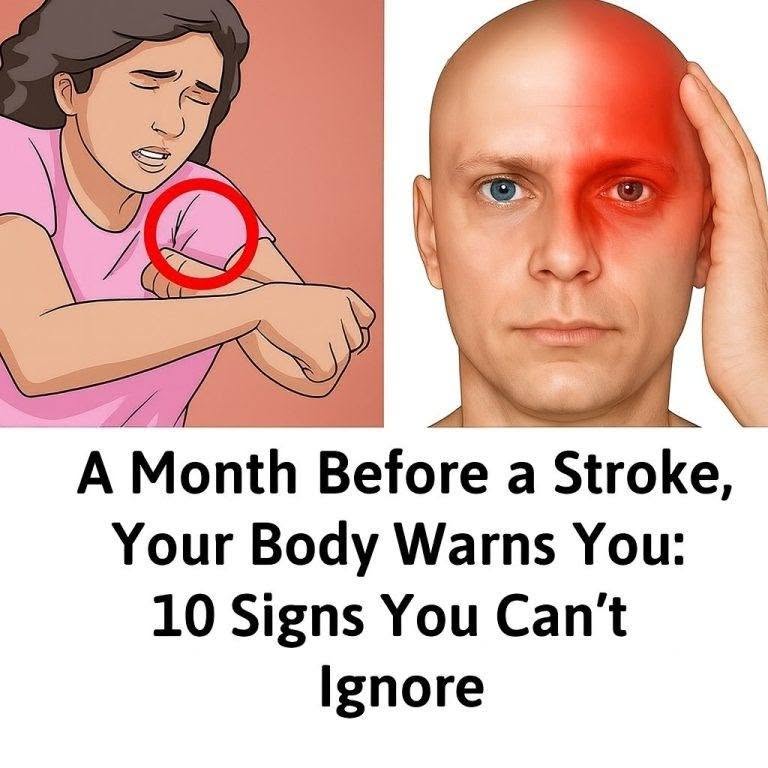
The headline “A month before a stroke, your body warns you: 10 signs not to ignore” is misleading in timing, but it’s based on a real medical idea: some people experience warning events before a stroke. However, these signs do not reliably appear exactly one month before, and they can happen hours, days, or not at all beforehand.
A stroke is a sudden event caused by reduced blood flow to the brain, often related to conditions like Stroke.
⚠️ Real warning signs you should never ignore
Some people experience a transient ischemic attack (TIA), often called a “mini-stroke,” which can precede a major stroke:
1. Sudden numbness or weakness
- Especially on one side of the face, arm, or leg
2. Trouble speaking or understanding speech
- Slurred or confused speech
3. Sudden vision problems
- Loss of vision in one or both eyes or blurred vision
4. Severe dizziness or loss of balance
- Trouble walking or coordination issues
5. Sudden severe headache
- Often described as the “worst headache of life”
⏱️ Important truth about timing
- A TIA can happen minutes, hours, days, or weeks before a stroke
- Some strokes happen without any warning signs at all
- There is no reliable “1-month warning pattern”
🚨 Emergency warning acronym: FAST
- F – Face drooping
- A – Arm weakness
- S – Speech difficulty
- T – Time to call emergency services immediately
🧭 Bottom line
Online posts saying “10 signs a month before a stroke” are oversimplified and misleading. The real takeaway is:
- Some warning symptoms can happen before a stroke
- But they are unpredictable in timing
- Any sudden neurological symptom is a medical emergency
If you want, I can also list the most common risk factors that actually increase stroke risk over time (like blood pressure, diabetes, etc.), which is more useful for prevention than symptom lists.