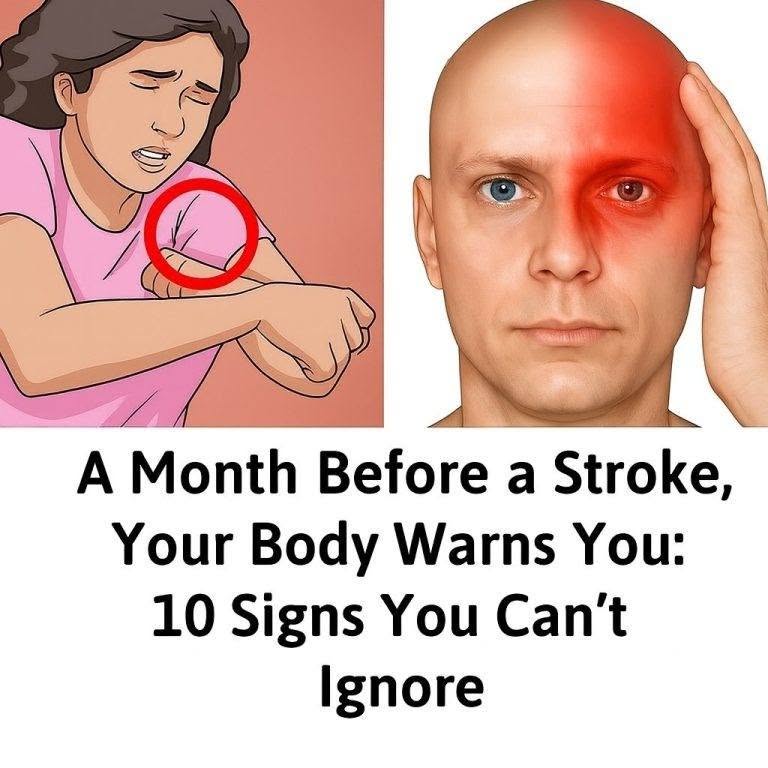
That headline is misleading because it suggests strokes reliably give a clear 1-month warning window, which is not how a stroke usually behaves.
The key medical truth
- Many strokes happen suddenly with no long warning period
- Some people may experience warning events called TIAs (mini-strokes), but these are often hours to days before, not a predictable month in advance
- There is no reliable “10-sign checklist” that guarantees a stroke is coming
What can happen beforehand (in some cases)
These symptoms may signal increased risk or a TIA and need urgent evaluation:
- sudden weakness or numbness (face, arm, or leg—especially one side)
- brief speech problems or confusion
- temporary vision loss or double vision
- sudden dizziness or balance problems
- unexplained severe headaches (less common, depends on stroke type)
⚠️ Important: even if these symptoms disappear, it can still be an emergency.
Why “1 month before” lists are misleading
- Stroke risk builds over years (high blood pressure, diabetes, smoking, cholesterol)
- The actual event is often abrupt
- Symptom timing is highly variable and not predictable like a countdown
What actually matters more than “early signs”
- controlling blood pressure and diabetes
- managing cholesterol
- not smoking
- regular physical activity
- seeking care immediately for sudden neurological symptoms
Bottom line
There is no dependable “10 warning signs a month before stroke” rule. The only truly reliable warning signs are sudden neurological changes, and those require immediate emergency attention.
If you want, I can show you the difference between true stroke symptoms vs common harmless conditions (like anxiety, migraine, or nerve pinches)—that’s where most confusion happens.