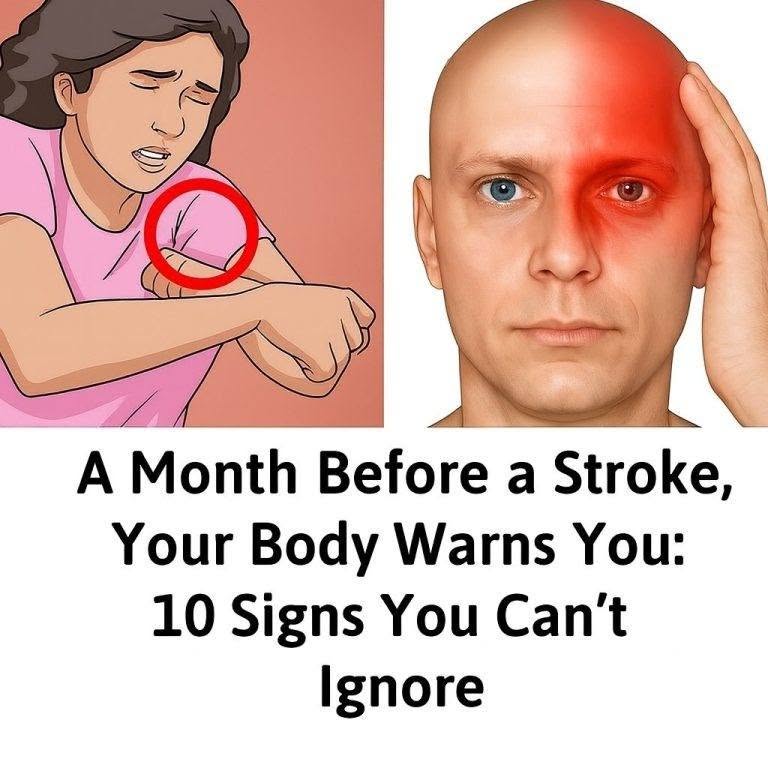
A Month Before a Stroke, Your Body May Warn You: 10 Signs Not to Ignore
A stroke can sometimes happen suddenly, but some people experience warning signs in the days, weeks, or even months before a stroke. These signs are not always obvious, and they can have many causes—but recognizing possible symptoms and getting medical advice early can be lifesaving.
A key warning event is a transient ischemic attack (TIA), sometimes called a “mini-stroke.” A TIA causes stroke-like symptoms that may disappear after minutes or hours, but it is a serious warning that a stroke risk may be increased.
10 Possible Warning Signs
1. Sudden weakness or numbness
Especially if it affects:
- One side of the face
- One arm
- One leg
This is one of the most important stroke warning signs.
2. Facial drooping
One side of the face may feel weak or appear uneven, especially when smiling.
3. Trouble speaking or understanding speech
Watch for:
- Slurred speech
- Difficulty finding words
- Confusion during conversation
4. Sudden vision problems
Possible changes include:
- Blurred vision
- Loss of vision in one or both eyes
- Double vision
5. Unexplained dizziness or loss of balance
Sudden:
- Trouble walking
- Poor coordination
- Feeling like the room is spinning
may require urgent evaluation.
6. Severe or unusual headache
A sudden, intense headache—especially one unlike previous headaches—can be a warning sign, particularly if accompanied by other symptoms.
7. Increased fatigue or unusual weakness
Persistent tiredness alone is not usually a stroke sign, but sudden or unexplained weakness should be discussed with a healthcare professional.
8. Memory or thinking changes
Some people notice:
- Confusion
- Difficulty concentrating
- Problems understanding information
9. Numbness or tingling sensations
Sudden “pins and needles” or loss of feeling, especially on one side of the body, should not be ignored.
10. Episodes that come and go
Symptoms that appear briefly and then disappear may be a TIA and still require urgent medical attention