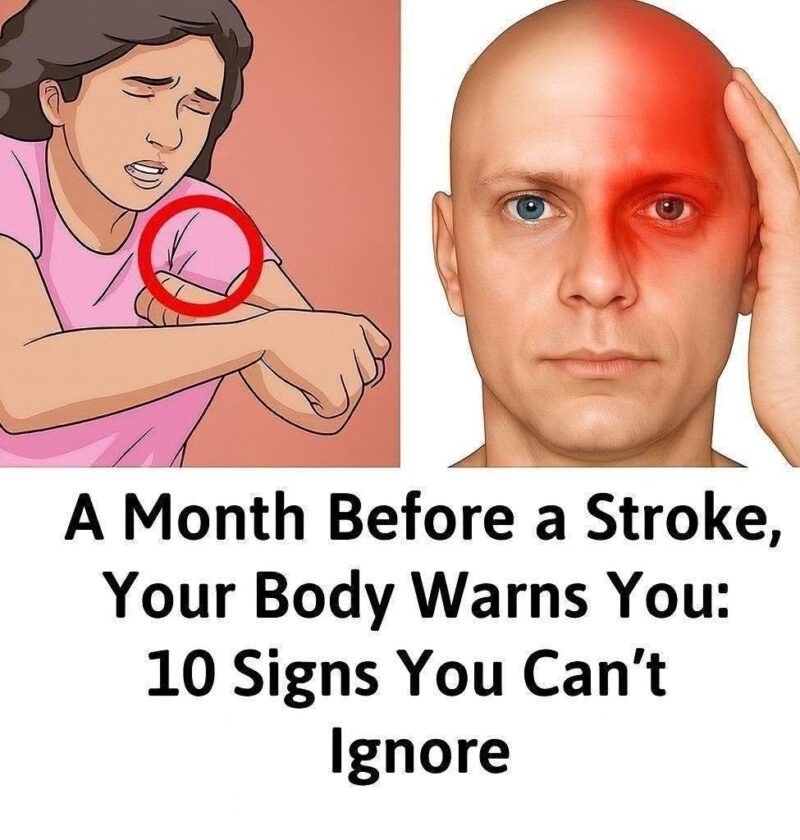
That headline is misleading clickbait.
A stroke (Stroke) usually happens suddenly, not as a predictable event with a reliable “10 signs one month before.”
🧠 What is actually true
There can be warning events, but they are not a fixed checklist or timeline.
🚨 Most important real warning: TIA (“mini-stroke”)
A transient ischemic attack can happen days or weeks before a stroke and may include:
- Sudden weakness or numbness (face/arm/leg)
- Temporary vision loss or blurred vision
- Trouble speaking or understanding speech
- Dizziness or loss of balance
These symptoms may disappear within minutes or hours—but they are a serious emergency warning.
⚠️ Common stroke symptoms (FAST)
These are the key signs to recognize anytime:
- F – Face drooping
- A – Arm weakness
- S – Speech difficulty
- T – Time to call emergency help
❌ Why “10 signs a month before” is not reliable
- Stroke timing is unpredictable
- Many strokes occur with no early warning
- Vague symptoms like fatigue, headaches, or sleep changes are not specific
- Online lists often mix unrelated symptoms to increase fear and clicks
🧠 Real risk factors (more important than “early signs”)
You should focus on prevention if you have:
- High blood pressure
- Diabetes
- Smoking
- High cholesterol
- Heart disease
- Obesity or inactivity
✔️ Bottom line
There is no proven set of 10 symptoms that reliably appear a month before a stroke. The only true warning that matters is sudden neurological symptoms or a TIA, which require immediate medical attention.
If you want, I can give you a simple stroke prevention checklist tailored to daily life in Pakistan (diet, blood pressure control, and habits).