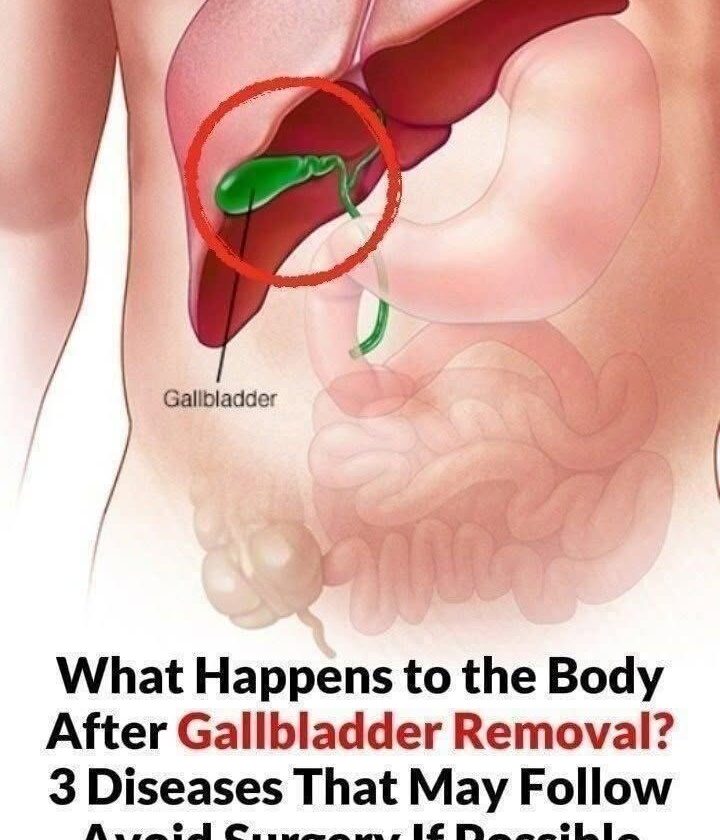
Headlines like “After Gallbladder Removal: 3 Conditions You Could Develop — Why You Should Avoid the Surgery When Possible” are often designed to grab attention. The reality is more nuanced.
Gallbladder removal (Cholecystectomy) is one of the most commonly performed surgeries and is generally considered safe when it’s medically indicated, such as for symptomatic gallstones or inflammation.
That said, there are potential long-term effects and complications, including:
- Digestive changes
- Some people experience diarrhea, bloating, or difficulty digesting fatty meals after surgery.
- For most, these symptoms improve over weeks to months, though a small percentage have persistent diarrhea.
- Bile reflux or post-cholecystectomy symptoms
- A minority of people develop ongoing abdominal pain, indigestion, or bile reflux. These symptoms can have several causes and should be evaluated by a healthcare professional.
- Slightly increased risk of certain digestive conditions
- Research has found associations between gallbladder removal and a modestly increased risk of conditions such as bile acid diarrhea or changes in the bile ducts. These associations do not mean everyone who has the surgery will develop these problems, and the absolute risk for most people remains low.
The important point is that avoiding surgery isn’t always the safer choice. If someone has:
- Repeated painful gallstone attacks,
- Acute Cholecystitis,
- Gallstones causing blockage of the bile duct or pancreas,
- Or other serious gallbladder complications,
then delaying or avoiding surgery can increase the risk of severe infection, Pancreatitis, or other potentially life-threatening problems.
If gallstones are found without symptoms, surgery is often not recommended unless there are specific risk factors. Treatment decisions are based on a person’s symptoms, overall health, and the likelihood of future complications.
In short:
- True: Gallbladder removal can have side effects and potential long-term digestive changes.
- Misleading: Most people should avoid the surgery whenever possible.
- Reality: When the surgery is medically indicated, its benefits usually outweigh the risks, and most people recover well and return to normal activities.