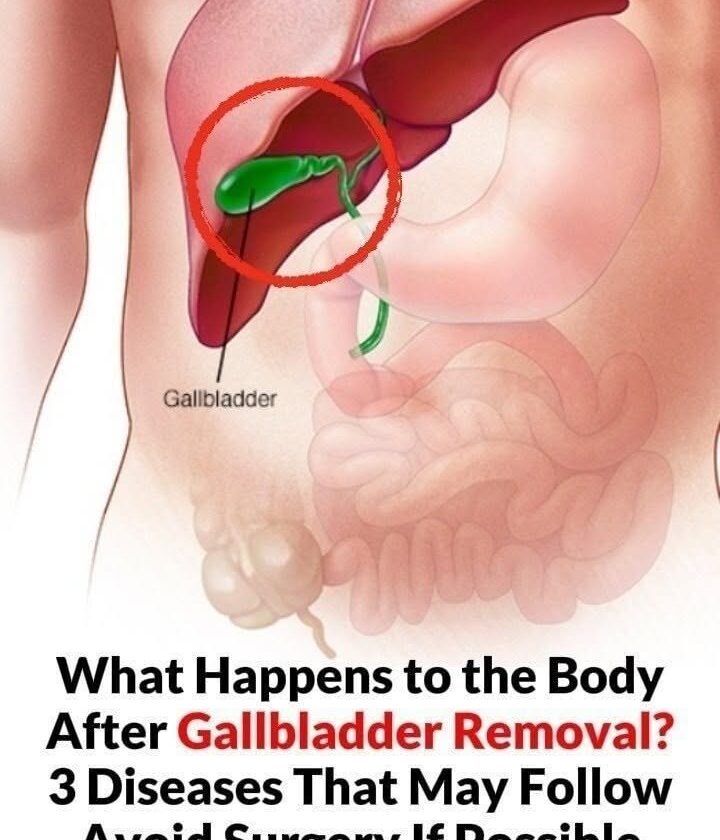
That headline is misleading and overly alarmist.Gallbladder removal (cholecystectomy) is a very common and generally safe surgery, and it is usually recommended when the benefits outweigh the risks—such as in recurrent gallstones, infection, or gallbladder inflammation.The claim “you should avoid surgery when possible” is not a medical rule; in many cases, avoiding surgery can be more dangerous than having it.
🩺 After Gallbladder Removal: What can actually happen?
After removal of the gallbladder (for conditions like Cholelithiasis), most people live normally. However, a small number may experience:
1. Post-cholecystectomy diarrhea
- More frequent or looser stools, especially after fatty meals
- Happens because bile flows continuously into the intestine instead of being stored
👉 Often improves over time or with dietary changes
2. Bile reflux or indigestion symptoms
- Bloating
- Mild upper abdominal discomfort
- Occasional heartburn-like symptoms
👉 Usually manageable with diet and, if needed, medication
3. “Post-cholecystectomy syndrome” (rare)
A small group may have ongoing symptoms such as:
- Abdominal pain
- Nausea
- Digestive discomfort
👉 Causes vary (sometimes unrelated to the surgery itself)
🧠 Important reality check
What the gallbladder actually does:
It stores bile, but it is not essential for digestion or survival.
After removal:
- The liver still produces bile normally
- Digestion continues, just less “stored and timed”
Most people:
- Eat normally after recovery
- Have no long-term problems
- Experience improved quality of life if they had painful gallstones before
🚨 When surgery is actually needed
Doctors usually recommend removal for:
- Repeated gallstone attacks
- Gallbladder infection (cholecystitis)
- Blocked bile ducts
- Severe pain affecting daily life
Delaying surgery in these cases can lead to:
- Infection
- Pancreatitis
- Emergency complications