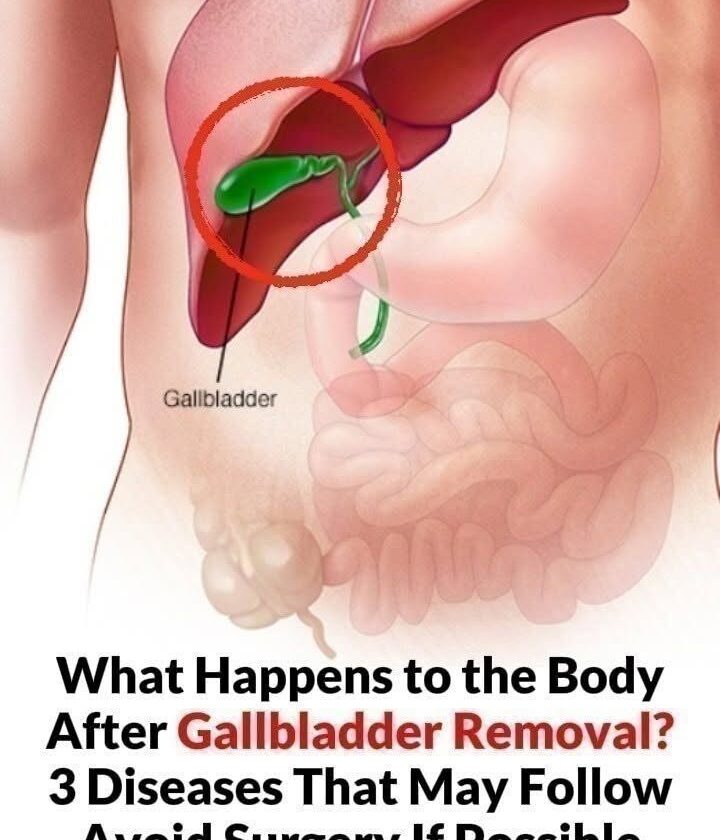
That headline is misleading because it implies that gallbladder removal should generally be avoided. In reality, when surgery is medically indicated—such as for painful gallstones, repeated gallbladder attacks, inflammation, or certain complications—the benefits often outweigh the risks.
The surgery, called Cholecystectomy, is one of the most commonly performed operations worldwide and is generally safe.
Conditions that can occur after gallbladder removal
1. Digestive changes and diarrhea
Without a gallbladder, bile flows more continuously into the intestine rather than being stored and released during meals. Some people experience:
- Loose stools
- Urgency after eating
- Increased sensitivity to fatty foods
For most people, these symptoms are mild or improve over time.
2. Post-cholecystectomy syndrome
A small number of people continue to have symptoms such as:
- Upper abdominal discomfort
- Bloating
- Nausea
- Indigestion
These symptoms may be related to other digestive conditions rather than the surgery itself.
3. Bile reflux (less common)
Some people develop bile flowing into the stomach, which can cause:
- Upper abdominal burning
- Nausea
- Stomach irritation
This is much less common than ordinary acid reflux.
Why surgery is sometimes necessary
Gallbladder removal may be recommended when a person has:
- Symptomatic gallstones
- Recurrent gallbladder attacks
- Gallbladder inflammation
- Gallstone-related pancreatitis
- Certain gallbladder polyps or other complications
Delaying necessary treatment can sometimes lead to serious complications, including infection or inflammation of the pancreas.
Can gallbladder surgery be avoided?
Sometimes, yes—if:
- Gallstones are present but causing no symptoms
- Symptoms are mild and another cause is found
- A physician determines surgery is not currently needed
However, there is no reliable diet, supplement, or “gallbladder cleanse” proven to eliminate symptomatic gallstones safely.