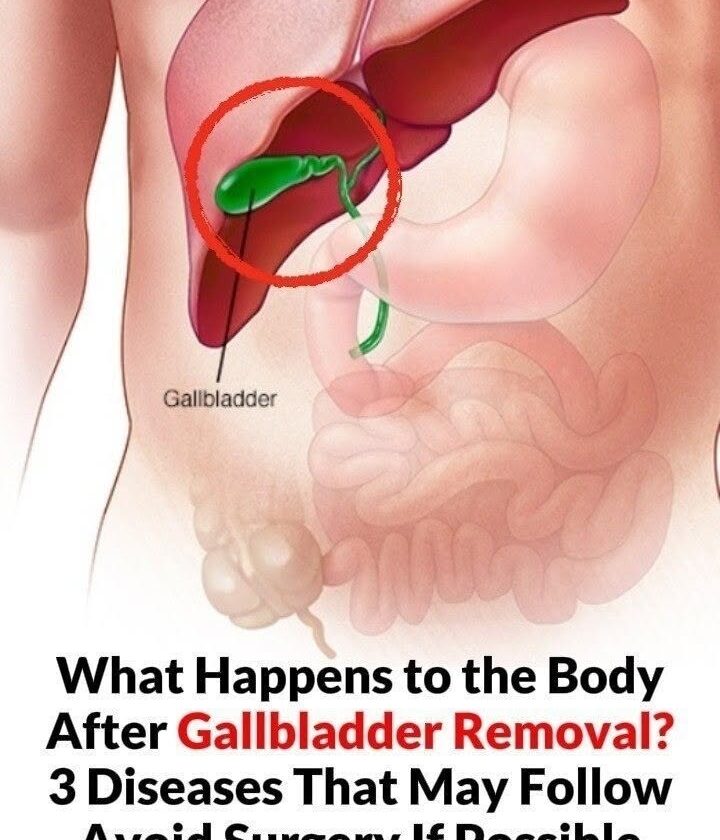
That headline is overly alarming. While gallbladder removal can have side effects and risks, it is often the recommended treatment for painful gallstones or certain gallbladder diseases, and many people do very well after surgery.
The procedure is called a Cholecystectomy.
Possible conditions or symptoms after gallbladder removal
1. Diarrhea or digestive changes
Without a gallbladder, bile flows more continuously into the intestine. Some people develop:
- Frequent stools
- Urgency after meals
- Chronic diarrhea (usually mild, but occasionally persistent)
2. Bile reflux
In some cases, bile may flow into the stomach and irritate the digestive tract, causing symptoms such as:
- Upper abdominal discomfort
- Nausea
- Heartburn-like symptoms
3. Post-cholecystectomy syndrome
A small number of people continue to have digestive symptoms after surgery, such as:
- Abdominal pain
- Bloating
- Indigestion
These symptoms can have several causes and don’t necessarily mean the surgery failed.
Why the headline is misleading
The implication that people should “avoid the surgery when possible” isn’t universally true.
Gallbladder removal is often recommended when a person has:
- Recurrent gallstone attacks
- Gallbladder inflammation
- Gallstone-related complications such as pancreatitis
In these situations, avoiding surgery may carry greater risks than having it.
The balanced view
- If gallstones are present but causing no symptoms, surgery is often not needed.
- If gallstones are causing significant symptoms or complications, surgery may be the safest and most effective option.
- The decision should be made with a healthcare professional based on the individual’s situation.
If you’re asking because you or someone you know is considering gallbladder surgery, I can explain the usual reasons doctors recommend it and what recovery is typically like.