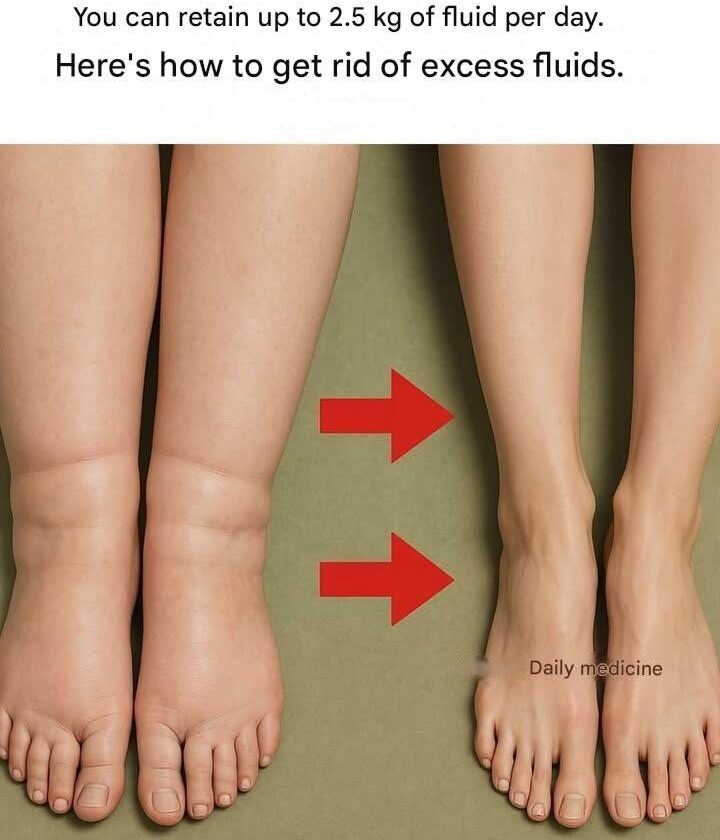
The idea that you can “retain up to 2.5 kg of fluid per day” is a common claim, but the amount of day-to-day weight change from water varies widely between people. Temporary water retention can happen because of salt intake, hormones, carbohydrate intake, heat, exercise, stress, or certain medications.
If you feel bloated or notice extra water weight, these habits may help:
1. Reduce excess sodium
- High-salt foods (processed meats, packaged snacks, instant foods) can make the body hold more water.
- Choose fresh foods more often and check food labels for sodium.
2. Stay properly hydrated
- Drinking enough water helps the kidneys regulate fluid balance.
- Dehydration can sometimes make the body hold onto water.
3. Move regularly
- Walking and gentle exercise can improve circulation and reduce fluid pooling, especially in the legs.
4. Eat potassium-rich foods (if appropriate for you)
- Foods such as bananas, leafy greens, beans, and potatoes can help balance sodium levels.
- People with kidney disease or certain heart conditions should ask a healthcare professional before increasing potassium.
5. Get enough sleep and manage stress
- Poor sleep and high stress can affect hormones involved in fluid regulation.
When to seek medical advice
Talk to a healthcare professional if you have:
- Sudden swelling in the legs, feet, hands, or face
- Shortness of breath
- Rapid unexplained weight gain
- Swelling that is severe or persistent
Those symptoms can sometimes signal conditions involving the heart, kidneys, liver, or circulation and should not be treated as simple “water weight.”