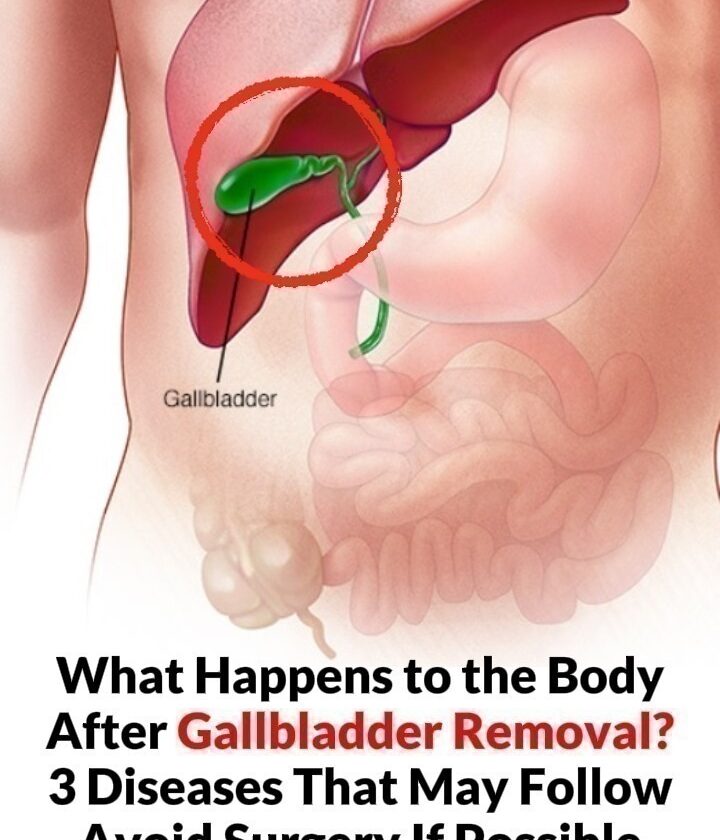
The idea behind that headline is clickbait-style and misleading. It frames gallbladder removal as something to “avoid when possible,” but in real medical practice, surgery is often the definitive and safest treatment when the gallbladder is diseased.
When gallbladder removal is actually recommended
Most commonly for Gallstones causing:
- repeated pain (biliary colic)
- inflammation (cholecystitis)
- blockage of bile ducts or pancreatitis risk
In these cases, removing the gallbladder (a cholecystectomy) prevents serious complications. Living with untreated symptomatic gallstones is usually riskier than surgery.
3 conditions some people may develop after gallbladder removal
It’s true that a minority of patients develop symptoms afterward, but these are not guaranteed and are often manageable.
1) Postcholecystectomy syndrome
Postcholecystectomy syndrome is a broad term for ongoing or new digestive symptoms after surgery, such as:
- abdominal pain
- bloating
- indigestion
- nausea
Why it happens: sometimes due to bile flow changes, sometimes unrelated issues (like ulcers or IBS that were already present).
2) Bile acid diarrhea (loose stools)
Without a gallbladder, bile flows continuously into the intestine instead of being stored and released in bursts.
This can cause:
- frequent loose stools
- urgency after meals
- difficulty digesting fatty foods (in some people)
This is usually treatable with diet changes or bile acid-binding medications.
3) Sphincter of Oddi dysfunction (rare)
This is a less common condition where the muscle controlling bile flow spasms or becomes dysfunctional, leading to:
- upper abdominal pain
- nausea
- episodes of digestive distress
It’s relatively uncommon but can mimic gallbladder-type pain even after removal.
Important reality check
- These complications are not common in most patients
- The majority of people live normally without a gallbladder
- Surgery prevents potentially dangerous complications from untreated gallstones
So the statement “you should avoid surgery when possible” is not medically accurate as a general rule. The correct approach is:
Avoid unnecessary surgery — but undergo gallbladder removal when there is a clear medical indication.
If you want, I can also explain:
- what life is like long-term after gallbladder removal
- or how to manage diet to prevent post-surgery symptoms
- or whether surgery is needed in your specific case based on symptoms or ultrasound findings